

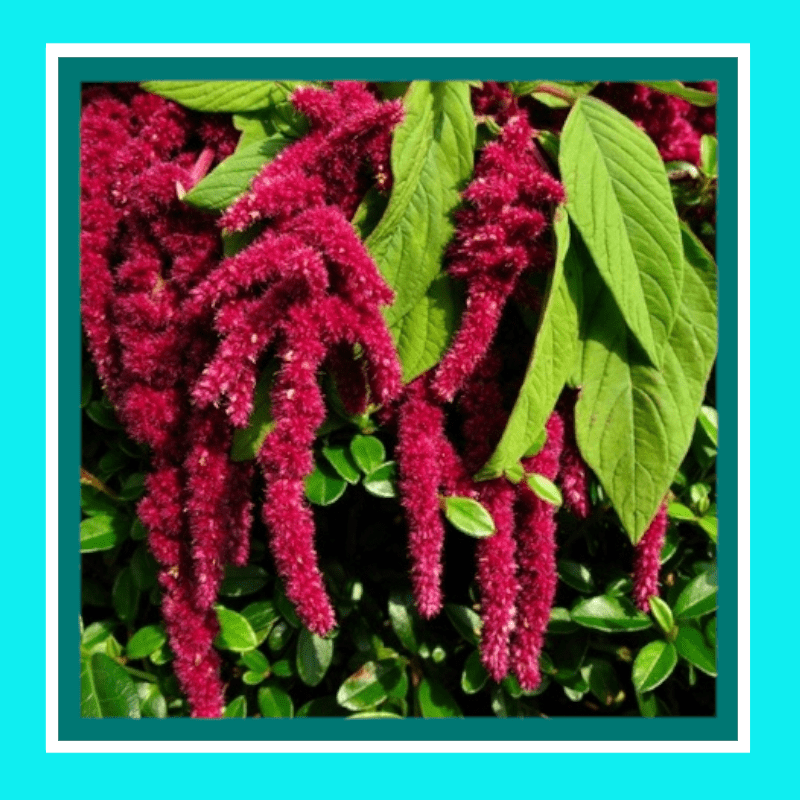
AMARANTH-LOVE LIES BLEEDING
$3.50
Shipping and taxes calculated at checkout
Seeds per pack:
1000
Amaranthus caudatus
AMARANTH-LOVE LIES BLEEDING is a striking garden plant that has impressive, richly coloured tassels. Great cut flower. Terrific as a pot plant or backdrop in a mixed bed or border. Produces large, pendulous flower heads that remain attractive for much of the summer. Height: 90cm Also called ‘Kiss Me Over the Garden Gate’ the dangling ropes of tiny burgundy blossoms have a wonderful texture, like soft chenille. Each Amaranthus plant can carry tens of thousands of flower seeds, & it self-seeds very easily. The amaranth genus, especially the seed, was used as a food source for the Incas and Aztecs. Leaves & seeds are very edible, cook the same as Spinach.
SKU: AMLLB
- Fast Australia-wide dispatch
- Secure checkout
- 30-day money-back guarantee
How to Grow Amaranth-Love Lies Bleeding
- Choose a site that receives full sun for most of the day and has well-draining soil.
- Prepare the soil to be fertile and loose to a depth of at least 12 inches. Add compost or aged manure to enrich the soil.
- Sow the seeds directly into the soil after the last frost in your area. Plant the seeds 1/4 to 1/2 inch deep and 1 to 2 inches apart. Cover the seeds with a light layer of soil.
- Water regularly keeping the soil moist but not waterlogged. Amaranth loves well-drained soil, so be sure not to overwater.
- Fertilize the plants with a balanced fertilizer every four to six weeks throughout the growing season.
- Control weeds in the area around the plants. Keep weed-free by pulling or hoeing them regularly.
- Thin the seedlings when they reach 2 to 3 inches tall, leaving 6 to 12 inches between plants.
- Harvest Love Lies Bleeding flowers when they are fully mature and the seed heads have turned brown. Cut the flowers at the base of the stem. Hang them upside down in a dry, well-ventilated area to dry.
Heritage of Amaranth
Love Lies Bleeding, also known as Amaranthus caudatus, is an ornamental plant that is native to the Americas, specifically to the Andes region of South America. The Incas and Aztecs cultivated Amaranth for thousands of years, using it for its medicinal and nutritional properties. Considered sacred by these cultures it was also used in religious ceremonies. Love Lies Bleeding was brought to Europe by Spanish conquistadors in the 16th century, and it became popular as an ornamental plant in European gardens during the 17th and 18th centuries. Its popularity spread to other parts of the world, and it is now grown as an ornamental plant in many countries. The plant is known for its striking, long-lasting, red-pink inflorescences, which hang down like tassels and can grow up to 60 cm (2 feet) in length.| Plant Height | 60 - 120cm (1'12" - 3'11") |
|---|---|
| Season of Interest | Summer / Autumn |
| Temperature Range | 15 - 30°C (59 - 86°F) |
| Annual / Perennial / Biennial | Annual |
| Frost Hardy / Tender | Tender |
| Sun Exposure | Full Sun |
| Sow Direct / Raise Seedlings | Sow Direct |
| Soil Type | Well drained fertile soil |
| Soil pH | 6.0 - 7.5 |
| Soil Temperature | 15 - 25 °C (59 - 77 °F) |
| Seed Preparation | Soak seeds in water overnight |
| Sowing Depth | 1mm (⅛") |
| Plant Spacing | 30 - 45cm (1⅛" - 1'6") |
| Row Spacing | 45 - 60cm (1'6" - 1'12") |
| Watering | Regular to keep soil moist, not waterlogged |
| Germination Time (Days) | 7-14 days |
| Harvest Time (Days) | 70 - 90 |
| Good Companion Plants | Marigolds, Nasturtiums, Sunflowers, Cosmos, Zinnias, Tomatoes:, Beans |
| Bad Companion Plants | Brassicas (cabbage, broccoli, kale) Nightshades (tomatoes, peppers, eggplants), Alliums (garlic and onions), Legumes (beans, peas), Fennel |
| Pests | Aphids, Flea Beetles, Caterpillars, Leaf Miners |
| Diseases | Powdery mildew, Leaf spot, Verticillium wilt, Fusarium wilt |
| Not shipped to Tasmania | true |
| Seeds per pack | 1000 |
| Min temperature (C) | 15 |
| Max temperature (C) | 30 |

AMARANTH-LOVE LIES BLEEDING
$3.50

More About Direct Compost Solutions
When I started this journey in 2009, I found nothing existed commercially, that was reasonably priced and easy to use. There was a homemade system which I also found was not that user-friendly.
Then a friend of mine told me about a homemade method she used. However, when I tried her method, I found this also didn't suit my needs, as it too had flaws that I considered where important. It did not keep vermin out, did not have a lockable lid and (to me) looked unsightly in the garden.
