

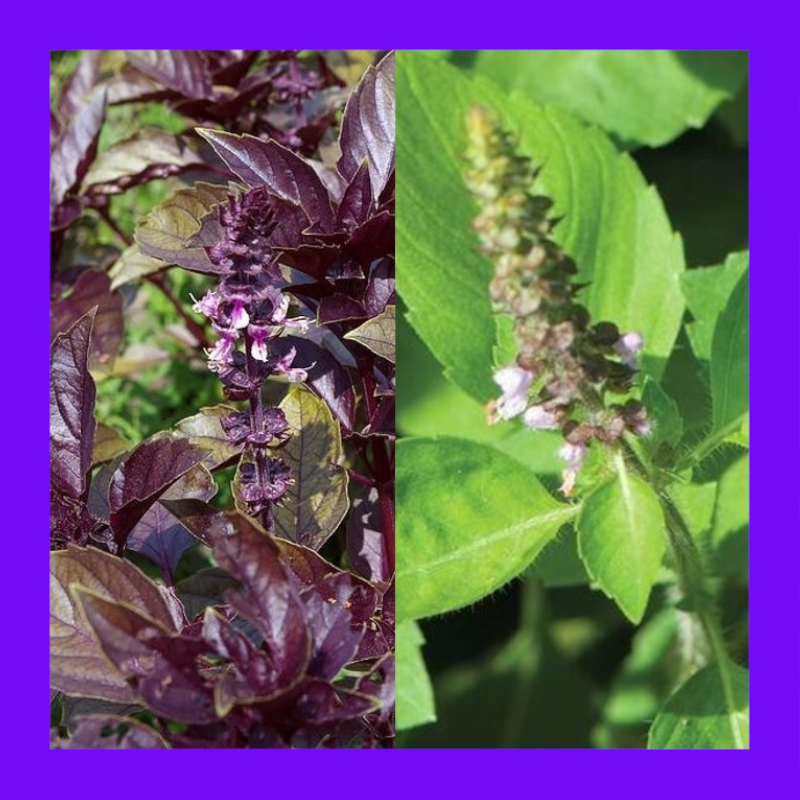
BASIL-HOLY GREEN/PURPLE MIX
$3.50
Shipping and taxes calculated at checkout
Seeds per pack:
525
Ocimum tenuiflorum
BASIL-HOLY MIX (TULSI) is a mix of Green & Purple Holy Basil. Holy Purple bears leaves that are mottled green and purple, that become more intensely purple as the plants mature. Both are considered holy herbs. As breezes blow through Tulsi plants, it blesses the surrounding areas making them pure & holy. In India, holy basil is known as Tulsi, which translates as ‘incomparable one’. It is also known to protect the home or shrine it is grown near. As a cooking herb, holy basil is added to stir-fry dishes & spicy soups.
There are several varieties of Holy Basil, with the most common being Ocimum sanctum (Krishna Tulsi), Ocimum tenuiflorum (Rama Tulsi), and Ocimum gratissimum (Vana Tulsi). Each variety has slightly different characteristics.
SKU: HBA-HM
- Fast Australia-wide dispatch
- Secure checkout
- 30-day money-back guarantee
How to Grow Holy Basil (Tulsi)
- Holy Basil prefers a warm and tropical climate. It thrives in well-drained soil with a pH ranging from 6 to 7.5. It is sensitive to frost, so it's essential to plant it after the last frost in your area.
- Tulsi Basil can be grown from seeds. You can start seeds indoors and transplant the seedlings outdoors once the weather is consistently warm. Alternatively, you can sow seeds directly in the garden. In some cultures, the process of propagating Holy Basil is considered a ritual. The seeds are often sown with care and reverence, emphasising the sacred nature of the plant.
- Plant the seeds or seedlings in a location that receives plenty of sunlight. Holy Basil prefers full sun but can tolerate partial shade. Space the plants about 12 to 18 inches apart.
- Water your Holy Basil regularly. Keep the soil consistently moist but not waterlogged. Once established, it is somewhat drought-tolerant.
- Fertilize the plants with a balanced, organic fertilizer during the growing season. Avoid excessive nitrogen, as this can promote leafy growth at the expense of essential oil production.
- Regular pruning helps promote bushy growth and prevents the plant from becoming leggy. Pinch off the tips of the branches regularly to encourage branching.
- You can start harvesting Holy Basil once the plant has reached a sufficient size. Harvest the leaves regularly, but avoid taking more than one-third of the plant at a time. This encourages continuous growth.
Heritage of Holy Basil (Tulsi)
Holy Basil, or Tulsi, has a rich cultural and spiritual heritage, particularly in Hinduism. It is considered a sacred plant and is often grown in and around households with deep reverence. Tulsi is associated with various Hindu deities, and its leaves are used in religious ceremonies and rituals. The plant has a long history of traditional medicinal use in Ayurveda, where it is valued for its adaptogenic properties and is believed to promote overall well-being. The cultural and medicinal significance of Holy Basil extends beyond its culinary and gardening uses, making it a plant deeply rooted in tradition and spirituality. Holy Basil is known to repel certain insects and pests. It's particularly beneficial when planted near tomatoes and cabbage. The leaves contain compounds so the plant is recognized as an adaptogen, producing essential oils with therapeutic properties helping the body cope with stress and promoting balance. The concentration of essential oils can vary among different varieties. Rama Tulsi, for example, is known for a higher oil content. Holy Basil's fragrance is refreshing and distinct. Planting it in your garden not only provides a useful herb but also contributes to the overall aromatic ambiance of the space. Mixing the leaves with other herbs like mint or chamomile can create delightful and soothing herbal infusions. Beyond medicinal uses, Holy Basil is used in various culinary dishes, especially in Southeast Asian cuisines. The leaves impart a distinct peppery, clove-like flavour to salads, stir-fries, and teas. Holy Basil attracts pollinators like bees, butterflies, and other beneficial insects. Growing it can contribute to the overall biodiversity of your garden. Remember, the uniqueness of growing Holy Basil goes beyond its cultivation techniques; it extends into the cultural, spiritual, and culinary aspects associated with this sacred herb.| Plant Height | 60 - 90 cm (1 - 2 feet) |
|---|---|
| Season of Interest | Summer |
| Temperature Range | 18 - 30°C (64 - 86°F) |
| Annual / Perennial / Biennial | Perennial in tropical/warm climates, but grown as an annual in colder climates |
| Frost Hardy / Tender | Frost Tender |
| Sun Exposure | Full Sun |
| Sow Direct / Raise Seedlings | Raise seedlings |
| Soil Type | Well-drained,fertile soil rich in organic matter. |
| Soil pH | 6.0 - 7.5 |
| Soil Temperature | 20 - 25 °C (68 - 77 °F) |
| Seed Preparation | Soak seeds overnight in warm water to enhance germination. |
| Sowing Depth | 0.5 cm (0.2 inches) |
| Plant Spacing | 30 cm (12 inches) |
| Row Spacing | 60 cm (24 inches) |
| Watering | Keep soil consistently moist but not waterlogged |
| Germination Time (Days) | 7 - 14 days |
| Harvest Time (Days) | 60 - 90 days |
| Good Companion Plants | Tomatoes,Peppers,Oregano,Mint,Marigold,Lettuce,Beans |
| Bad Companion Plants | Fennel, Thyme, Cucumber, Rue, Sage |
| Pests | Aphids, Whiteflies, Spider Mites,Leaf Miners,Mealybugs |
| Diseases | Downy Mildew, Fusarium Wilt, Powdery Mildew,Root Rot |
| Not shipped to Tasmania | true |
| Seeds per pack | 525 |
| Min temperature (C) | 18 |
| Max temperature (C) | 30 |

BASIL-HOLY GREEN/PURPLE MIX
$3.50

More About Direct Compost Solutions
When I started this journey in 2009, I found nothing existed commercially, that was reasonably priced and easy to use. There was a homemade system which I also found was not that user-friendly.
Then a friend of mine told me about a homemade method she used. However, when I tried her method, I found this also didn't suit my needs, as it too had flaws that I considered where important. It did not keep vermin out, did not have a lockable lid and (to me) looked unsightly in the garden.
