

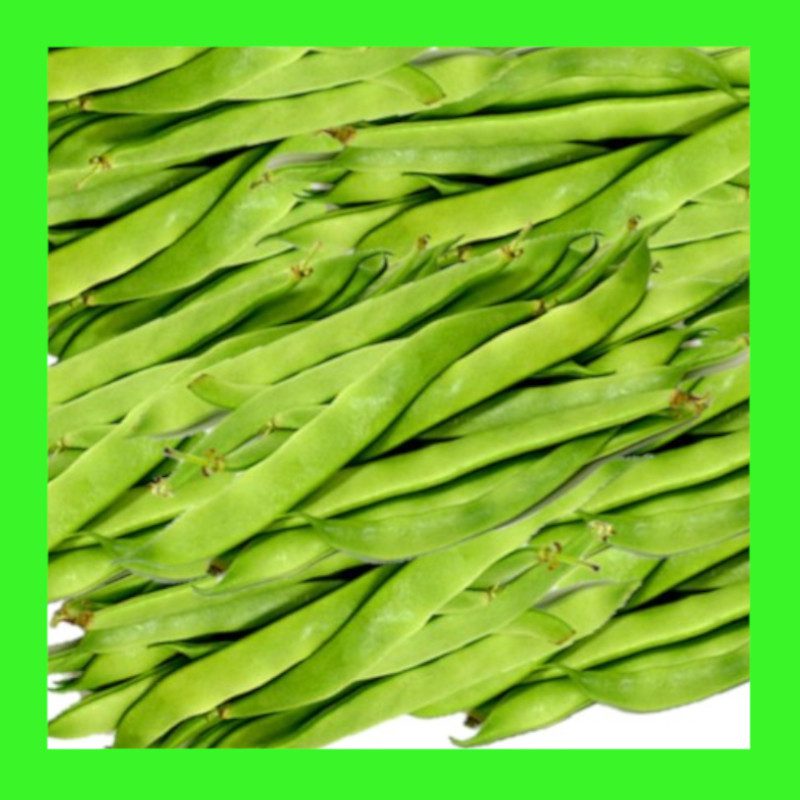
BEAN-ITALIAN ROMANO-BUSH
$3.50
Shipping and taxes calculated at checkout
Seeds per pack:
10
Phaseolus Vulgaris
BEAN-ITALIAN ROMANO-BUSH is a stringless flat bean also known as Italian flat beans or Italian pole beans. Medium-green pods 15 cm long are typically left on the vine to mature. This classic Italian flat type bean (similar to snap beans) has a more meaty texture and nutty flavour. Producing high yields, the vines are loaded with long, stringless, flat-podded green beans right up to frost. Beans hold well on the plant without becoming tough. Very disease resistant and productive. Height To 70cm.
Romano beans are a good source of protein, fiber, and vitamins A and C. They are often served as a side dish, sautéed with garlic and olive oil or braised with tomatoes. The Italian city of Ravenna is known for its Romano bean festival, which takes place every September. The festival celebrates the local variety of Romano bean, which is called Fagiolo di Lamon.
SKU: BNIR-B
- Fast Australia-wide dispatch
- Secure checkout
- 30-day money-back guarantee
How to Grow Italian Romano Bean
- Choose a sunny location with well-draining soil. Beans need at least 6 hours of direct sunlight per day.
- Work the soil to a depth of 6-8 inches and mix in compost or aged manure to improve soil fertility.
- Plant seeds after the last frost, when soil temperatures have warmed to at least 16°C. Sow the seeds 2.5 - 5cm (1-2 inches deep), spaced 5 - 10cm (2-4 inches) apart in rows that are 45 - 50cm (18-24 inches) apart.
- Water the beans deeply and regularly to keep the soil evenly moist. Beans need about 1 inch of water per week.
- Fertilise the beans with a balanced fertiliser at planting time and again when the plants start to flower.
- As the beans grow, provide support for the plants with stakes or a trellis to keep them off the ground and prevent rot.
- Harvest the beans when they are young and tender, usually within 50-60 days after planting. Be sure to pick the beans regularly to encourage new growth
Heritage of Italian Romano Bean
Romano beans are believed to have originated in Mexico and were brought to Europe by Spanish explorers in the 16th century. They were later introduced to Italy and became a popular ingredient in Italian cuisine. They are also known as Italian flat beans they are generally harvested when they are young and tender. Commonly used in salads, stews, and soups. Italian Romano Beans are considered to be a heritage vegetable, meaning that they have been passed down through generations and are an important part of culinary and cultural history. SHOP Seeds| Plant Height | 45 - 60 cm (18 - 24 inches) |
|---|---|
| Season of Interest | Summer |
| Temperature Range | 18 - 30°C (64 - 86°F) |
| Annual / Perennial / Biennial | Annual |
| Frost Hardy / Tender | Frost Tender |
| Sun Exposure | Full Sun |
| Sow Direct / Raise Seedlings | Sow Direct |
| Soil Type | Well-drained fertile soil |
| Soil pH | 6.0 - 7.5 |
| Soil Temperature | 15 - 30 °C (59 - 86 °F) |
| Seed Preparation | No special preparation required |
| Sowing Depth | 2.5 cm (1 inch) |
| Plant Spacing | 10 - 15 cm (4 - 6 inches) |
| Row Spacing | 45 - 60 cm (18 - 24 inches) |
| Watering | Regular watering, do not let the soil dry out |
| Germination Time (Days) | 7 - 14 days |
| Harvest Time (Days) | 50 - 65 days |
| Good Companion Plants | Tomatoes, Carrots, Cucumbers, Potatoes, Celery, Corn |
| Bad Companion Plants | Onions, Garlic, Shallots, Sunflowers,Fennals |
| Pests | Bean Beetles, Aphids,Leafhoppers, Spider Mites |
| Diseases | Anthracnose, Powdery Mildew, Bean Rust, Bean Common Mosaic Virus,Rust |
| Not shipped to Tasmania | true |
| Seeds per pack | 10 |
| Min temperature (C) | 18 |
| Max temperature (C) | 30 |

BEAN-ITALIAN ROMANO-BUSH
$3.50

More About Direct Compost Solutions
When I started this journey in 2009, I found nothing existed commercially, that was reasonably priced and easy to use. There was a homemade system which I also found was not that user-friendly.
Then a friend of mine told me about a homemade method she used. However, when I tried her method, I found this also didn't suit my needs, as it too had flaws that I considered where important. It did not keep vermin out, did not have a lockable lid and (to me) looked unsightly in the garden.
