

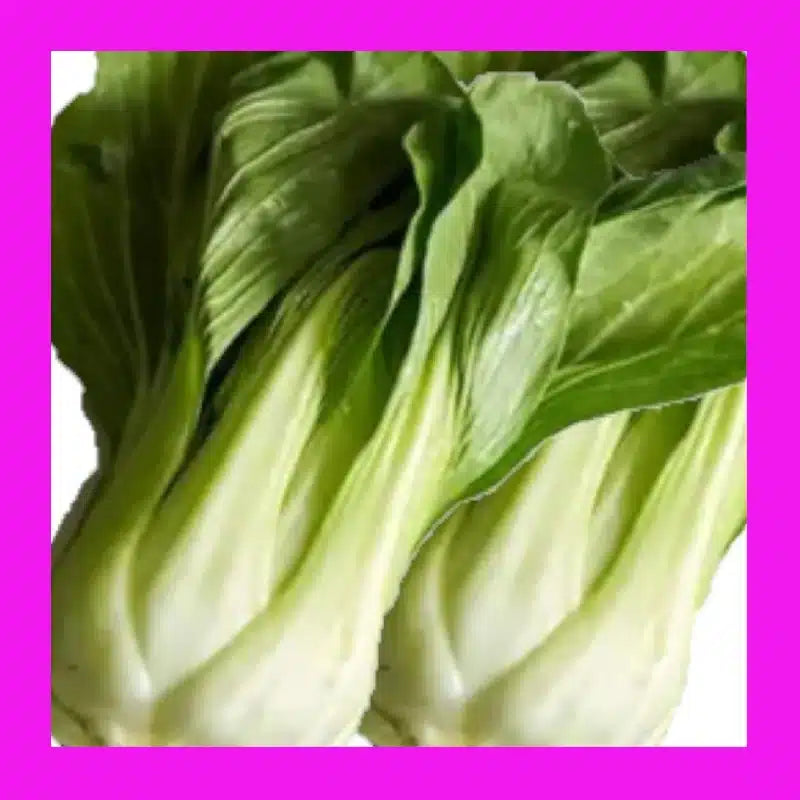
CABBAGE-PAK CHOI-ASIAN GREENS
Shipping and taxes calculated at checkout
SKU: CBPC-AG
- Fast Australia-wide dispatch
- Secure checkout
- 30-day money-back guarantee
How to Grow Pak Choi (Bok Choy)
- Best grown in autumn and spring, or year-round in mild climates.
- Avoid hot weather, as high temperatures cause bolting (premature flowering) which is actually a good time to pick seeds.
- Pak Choi prefers fertile, well-drained soil rich in organic matter with a pH of 6.0 to 7.5.
- Add composted soil or aged organic manure before planting for strong healthy sprouting
- Sow to a depeth of 0.5–1 cm (¼–½ in) deep. And keep soil moist during germination
- Space thinly or transplant seedlings 20 - 0 cm (8 - 12 in) apart in rows 30 - 45 cm (12 - 18 in) apart.
- Germination occurs best between 13 - 24 °C (55 - 75 °F) for crisp stems and tender leaves.
- Perfers full sun to partial shade or light shade in warm climates to reduce heat stress.
- Water consistently to keep soil moist but not waterlogged.
- Mulch to retain moisutre and prevent soil from drying out.
- Fertilise with a balanced fertilise or one righ in nitrogen every 2 - 3 weeks to encourge leafy growth, but avoid excessive nitrogen late in the growth cycle to prevent the stems from going soft.
- Harvest in 6 - 8 weeks. You can pick individual leaves for ongoing harvest or cut the entire heads off when mature.
Additional growing tips for Pak Choi-Asian Greens
- Stagger your sowings: Sow small batches every 2-3 weeks instead of one big planting to avoid everything maturing at once - ideal for continuous harvests and less pest pressure.
- Partial-shade trick in warm climates: In hot weather, plant Pak Choi on the eastern side of taller crops (like tomatoes, corn, or trellised cucumbers) so it gets morning sun and afternoon shade - this helps prevent bolting.
- Use a “moist-start” method: Before sowing, water the soil deeply, then sow seeds into the damp surface and lightly cover with dry soil. This reduces crusting and improves germination.
- Companion cover mulch: Surround plants with living mulch such as low-growing herbs (e.g., coriander or parsley) to shade the soil, conserve moisture, and deter flea beetles.
- Grow under insect netting from day one: Flea beetles and cabbage moths often attack seedlings early - placing fine mesh or netting immediately after sowing can prevent most infestations before they start.
- Cool-root hack: In warm regions, mulch heavily with straw or sugarcane to keep roots cool; heat around the base triggers stress and premature flowering.
- Harvest “cut-and-come-again” style: Instead of pulling the whole plant, cut leaves 2-3 cm (1 in) above the base - the centre will regrow for multiple harvests, extending the crop’s life.
- Water early, not late: Water in the morning, not evening - reduces humidity overnight and lowers the risk of fungal issues like downy mildew.
- Liquid compost tea boost: A fortnightly watering with diluted worm tea or compost tea keeps the soil microbes active and boosts leaf quality without over-fertilising.
- Succession trick with radishes: Sow radishes between Pak Choi rows - they germinate faster, mark the row spacing, deter pests, and are harvested before the Pak Choi matures.
- Shade-cloth mini tunnel: A 30-40% shade cloth tunnel can drastically extend the growing season in warm regions like Queensland — preventing bolting and keeping leaves tender.
- Cold-frame advantage: In cooler areas, grow under a clear plastic cold-frame or mini-greenhouse to maintain warmth and speed growth without full sun exposure.
Heritage of Pak Choi-Asian Greens
Pak Choi (Brassica rapa subsp. chinensis) is one of China’s oldest cultivated vegetables, dating back over 1,500 years. The name “Pak Choi” comes from Cantonese, meaning “white vegetable”, while “Bok Choy” is its Mandarin counterpart. Originally grown in the Yangtze River Delta region, it spread across Asia and became a staple in Chinese, Korean, and Japanese cuisines. By the 18th century, it was introduced to Europe through early trade routes and later to North America and Australia with Chinese migration. Today, Pak Choi remains a cornerstone of Asian and global cuisine, valued for its rapid growth, nutritional content, and adaptability to diverse climates. (Sources: National Library Board Singapore, Rutgers University – NJAES, PROSEA – Plant Resources of South-East Asia)
| Plant Height | 20 - 30 cm (8 - 2 in) |
|---|---|
| Season of Interest | Autumn and Spring (can grow year-round in mild climates) |
| Temperature Range | 15 - 20 °C (59 - 68 °F) ideal; tolerates 10 - 24 °C (50 - 75 °F) |
| Annual / Perennial / Biennial | Annual |
| Frost Hardy / Tender | Light Frost Hardy |
| Sun Exposure | Full sun to part shade (light shade helps prevent bolting in warm weather) |
| Sow Direct / Raise Seedlings | Sow direct or raise seedlings |
| Soil Type | Fertile, well-drained soil rich in organic matter |
| Soil pH | 6.0 - 7.5 |
| Soil Temperature | 13 - 24 °C (55 - 75 °F) |
| Seed Preparation | No pre-treatment required; keep soil moist until germination |
| Sowing Depth | 0.5 - cm (¼ - ½ in) |
| Plant Spacing | 20 - 30 cm (8 - 12 in) apart; 10 - 15 cm (4 - 6 in) for baby Pak Choi |
| Row Spacing | 30 - 45 cm (12 - 18 in) |
| Watering | Keep soil evenly moist; avoid drying out; mulch to retain moisture |
| Germination Time (Days) | 7 - 10 days |
| Harvest Time (Days) | 40 - 60 days (6 - 8 weeks) depending on variety and climate |
| Good Companion Plants | Carrots, Beets, Onions, Lettuce, Spinach, Dill, Mint, Chamomile, Marigolds. Nasturtiums, Celery, Coriander (Cilantro) |
| Bad Companion Plants | Other Brassicas (Cabbage, Broccoli, Cauliflower, Kale), Nightshades (Tomatoes, Eggplants, Potatoes), Fennel |
| Pests | Aphids, Flea Beetles, Cabbage Moths, Loopers, Slugs, Snails, Whiteflies, Leafminers |
| Diseases | Clubroot, Downy Mildew, Alternaria Leaf Spot, Soft Rot, Powdery Mildew (occasionally) |
| Not shipped to Tasmania | true |
| Seeds per pack | 500 |
| Min temperature (C) | 15 |
| Max temperature (C) | 20 |

CABBAGE-PAK CHOI-ASIAN GREENS
$3.50

More About Direct Compost Solutions
When I started this journey in 2009, I found nothing existed commercially, that was reasonably priced and easy to use. There was a homemade system which I also found was not that user-friendly.
Then a friend of mine told me about a homemade method she used. However, when I tried her method, I found this also didn't suit my needs, as it too had flaws that I considered where important. It did not keep vermin out, did not have a lockable lid and (to me) looked unsightly in the garden.
