

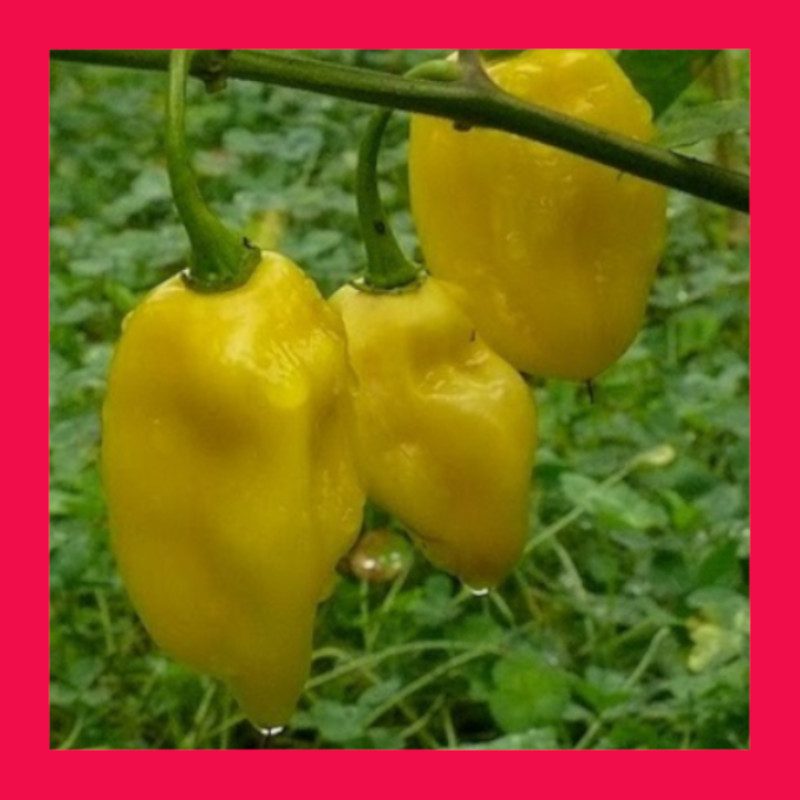
CHILLI-HABANERO-YELLOW
$3.60
Shipping and taxes calculated at checkout
Seeds per pack:
15
Capsicum chinense
CHILLI-HABANERO-YELLOW is distinguished by thin, waxy yellow skin, a floral aroma & a fruity, citrus-like flavour. A very pungent chilli that turns yellow at maturity. The bush itself, like most Chinense plants, is stout & compact.
Habanero yellow chillies are a vibrant and fiery variety of the famous Habanero pepper, known for their bright color, fruity aroma, and intense heat, which can range from 100,000 to 350,000 on the Scoville scale. These chillies add both spice and flavor to dishes like salsas, hot sauces, and marinades. They thrive in warm climates, requiring full sun and well-draining soil, and are a favorite among gardeners for their compact growth and abundant harvests. Ideal for spice enthusiasts, yellow Habaneros offer a distinctive balance of heat and tropical sweetness.
Keep in mind that Habanero-Yellow is a very hot pepper and the heat level can vary depending on the growing conditions. Be sure to wear gloves when handling them and be careful when consuming them.
SKU: CIHBY
- Fast Australia-wide dispatch
- Secure checkout
- 30-day money-back guarantee
- Choose a location for your Habanero-Yellow Chilli plants that is warm, sunny with with well-draining soil. Make sure the location you choose has at least 6 hours of direct sunlight per day.
- If required you can start your seeds indoors, 6-8 weeks before the last frost date in your area. Sow the seeds in seed trays or pots filled with seed compost and cover with a plastic wrap or propagator lid to maintain humidity.
- Transplant seedlings once the seedlings have grown to about 7-10cm tall and have at least two sets of true leaves, into larger pots or into the garden.
- Regular watering and fertilisation are necessary for your plants to thrive. Water the plants when the soil is dry to the touch and fertilise them every 2-3 weeks with a balanced fertiliser.
- Chili peppers are typically grown as bush plants, however, they can get tall and heavy with fruit. Provide support to the plants as they grow.
- Keep an eye out for pests such as aphids, whiteflies and spider mites, and diseases such as powdery mildew and blight. Use organic pest control methods if possible.
- Harvest your Habanero Yellow Chillies about 75-90 days after transplanting, depending on the variety. The peppers will change colour from green to yellow when they are fully ripe.
Additional growing tips
You can follow the tips on Growning Habanero Yellow Chilli F1 Differences between open pollinated Habanero Yellow and Hybrid F1 Habanero Yellow Chilli seeds. ( article coming soon)Heritage of Habanero Yellow Chilli
Habanero Yellow Chilli originates from the tropical regions of the Caribbean, Central America, and the Yucatán Peninsula of Mexico, later being transported to other parts of the world by Spaniards. It is part of the Capsicum chinense species, which includes some of the hottest peppers in the world. The name "Habanero" is derived from the city of Havana, Cuba, though the pepper itself is not native to Cuba. Instead, it was likely traded through the region, gaining its name along the way. Historically, Habanero peppers have been cultivated for centuries by indigenous peoples in Central America, where they were a staple in traditional diets and were also used for medicinal and ceremonial purposes. The yellow variant of the Habanero likely developed as a natural mutation, prized for its striking color and slightly sweeter, fruitier flavor compared to the standard orange variety. Today, yellow Habaneros are highly valued in Caribbean and Mexican cuisines, celebrated for their unique blend of heat and tropical sweetness.| Scoville Heat Units (SHU) | 150,000 - 350,000 |
|---|---|
| Plant Height | 60 - 90cm (1'12" - 2'11") |
| Season of Interest | warm to hot |
| Temperature Range | 18 - 35°C (64 - 95°F) |
| Determinate / Indeterminate | Determinate |
| Annual / Perennial / Biennial | Perenial/Annual |
| Frost Hardy / Tender | Tender |
| Sun Exposure | Full sun |
| Sow Direct / Raise Seedlings | Either |
| Soil Type | Sandy Loam, Rich in nutrients. added compost to the soil for fertility, and dolomite or crushed egg shells to help fend off blossom end rot |
| Soil pH | 5 - 6 |
| Soil Temperature | 18 - 30°C (64 - 86°F) |
| Seed Preparation | Soak seeds overnight in lukewarm water or freeze for a few days before planting |
| Sowing Depth | 4mm (⅛") |
| Plant Spacing | 40 - 60cm (1'4" - 1'12") |
| Row Spacing | 80 - 100cm (2'7" - 3'3") |
| Watering | deep watering once or twice per week depending on weather |
| Germination Time (Days) | 7 - 14 |
| Harvest Time (Days) | 60 - 90 |
| Good Companion Plants | carrots, cucumber, squash, members of the Allum family, Basil, Dill, Fennel |
| Bad Companion Plants | Fennel Kohlrabi and Brassicas (cabbage, cauliflower, broccoli) Apricots |
| Pests | Aphids, Whiteflies, Thrips, Spider mites, Pepper weevils |
| Diseases | Blossom End Rot, Bacterial spot, Anthracnose Fusarium wilt, Powdery mildew, Mosaic virus |
| Not shipped to Tasmania | true |
| Seeds per pack | 15 |
| Min temperature (C) | 18 |
| Max temperature (C) | 35 |

CHILLI-HABANERO-YELLOW
$3.60

More About Direct Compost Solutions
When I started this journey in 2009, I found nothing existed commercially, that was reasonably priced and easy to use. There was a homemade system which I also found was not that user-friendly.
Then a friend of mine told me about a homemade method she used. However, when I tried her method, I found this also didn't suit my needs, as it too had flaws that I considered where important. It did not keep vermin out, did not have a lockable lid and (to me) looked unsightly in the garden.
