

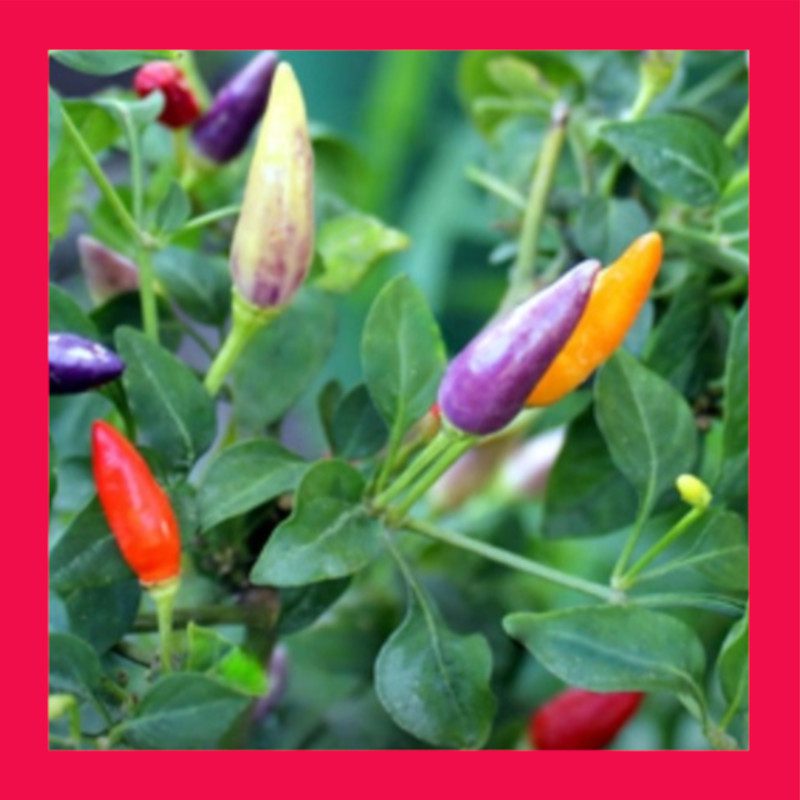
CHILLI-NUMEX MEXICAN TWILIGHT
$3.60
Shipping and taxes calculated at checkout
Seeds per pack:
25
Capsicum annuum
CHILLI-NUMEX MEXICAN TWILIGHT was developed at New Mexico State University. This hybrid chilli is a showstopper in the garden with a good chilli bite to boot. Numex Mexican Twilight chilli is a variety of chilli pepper that is known for its unique colour, which changes as it matures. It is also known for its moderate heat level. The Numex Mexican Twilight pepper is a member of the Capsicum annuum species, which also includes other popular chilli peppers such as Jalapeno, Serrano, and Poblano.
Medium hot flavour 30,000 to 50,000 SHUs making it hotter than Jalapenos. The changing colours as it ripens start with purple to yellow to orange, and red brighten up any garden or any veranda in a container. Small 2 cm pods stand up right from the plant, look fabulous pickled, or in Salsa to add colour. Some say it tastes salty-bitter, so they won’t appeal to everyone but have many different uses in the kitchen. Worth it for the look in the garden alone. Dry, then crush them to a powder if this suits you better.
Chillies like warm humid climate, average temp between 28﮿C to 30﮿C. Can be grown inside over winter and planted out when temperatures are warm enough after the last frost. Will survive winter if protected, but cut back before winter begins, mulch around the plant and cover if possible. As it matures feed every 2 weeks with a good soluble fertiliser or make your own banana skin liquid, and water regularly. Grow as you would any chilli.
Remember to protect your chilli plants from pests such as aphids, spider mites, and whiteflies by planting companion plants near your chillies. And you can control them with insecticidal soap, neem oil or organic insecticides. Additionally, watch out for fungal diseases such as powdery mildew and root rot. Avoid overwatering and provide good air circulation to prevent these diseases.
SKU: CINMT
- Fast Australia-wide dispatch
- Secure checkout
- 30-day money-back guarantee
How to Grow Numex Mexican Twilight Chillies
- Numex Mexican Twilight chilli pepper plants prefer warm, sunny locations with well-draining soil. Make sure the location you choose has at least 6 hours of direct sunlight per day. Consider growing it in a greenhouse or in a warm and sheltered spot outdoors.
- Start Numex Mexican Twilight chilli pepper plants from seed indoors, 6-8 weeks before the last frost date in your area. Sow the seeds in seed trays or pots filled with seed compost and cover with a plastic wrap or propagator lid to maintain humidity. Or plant directly in your garden after the last frost.
- Transplant seedlings into your garden or large pots once they have grown to about 7-10cm tall and have at least two sets of true leaves
- Provide proper care with require regular watering and fertilisation to thrive. Water the plants when the soil is dry to the touch and fertilise them every 2-3 weeks with a balanced fertiliser.
- Support your chili peppers if they grow tall and become heavy with fruit. Though typically chilli's are grown as bush plants.
- Keep an eye out for pests such as aphids, whiteflies and spider mites, and diseases such as powdery mildew and blight. Use organic pest control methods if possible.
- Pinch back the growing tips of the plant to encourage bushier growth and more fruit production. You can also remove any damaged or diseased leaves to prevent the spread of disease.
- Harvest your Numex Mexican Twilight peppers at typically 75-90 days after transplanting, depending on the variety. The peppers will change colour from green to orange and then to red as they ripen.
- Use scissors to cut the chillies from the plant. Keep in mind that the heat level of the chillies may vary depending on the ripeness of the fruit
Heritage of Numex Mexican Twilight Chilli
New Mexico State University (NMSU) in the United States developed the Numex Mexican Twilight Chili. Part of NMSU's breeding program it aimed to create new cultivars with desirable traits, such as disease resistance, high yields, and unique flavours. Numex Mexican Twilight Chili was created by crossing several different chilli pepper varieties, including the Peruvian Aji Amarillo and the New Mexican Numex Big Jim. The resulting cultivar has a compact, bushy growth habit and produces an abundance of small, cone-shaped peppers that mature from purple to yellow to orange to red. The pepper's name "Numex" is derived from "New Mexico State University", where it was developed. The word "Twilight" refers to the pepper's colourful range of hues, which can resemble the colours seen in the sky during a sunset. The pepper's heritage is a result of the efforts of plant breeders at NMSU, who sought to create a new and visually stunning chilli pepper cultivar that would be suitable for home gardeners and small-scale growers.| Scoville Heat Units (SHU) | 30,000 - 50,000 |
|---|---|
| Plant Height | 40 - 50cm (1'4" - 1'8") |
| Season of Interest | warm to hot |
| Temperature Range | 25 - 35°C (77 - 95°F) |
| Annual / Perennial / Biennial | Perenial/Annual |
| Frost Hardy / Tender | Tender |
| Sun Exposure | Full sun, but shade from harsh western sun |
| Sow Direct / Raise Seedlings | Either |
| Soil Type | Sandy Loam, Rich in nutrients. added compost to the soil for fertility, and dolomite or crushed egg shells to help fend off blossom end rot |
| Soil pH | 6 - 8 |
| Soil Temperature | 22 - 35°C (72 - 95°F) |
| Seed Preparation | Soak seeds overnight in lukewarm water or freeze for a few days before planting |
| Sowing Depth | 5mm (¼") |
| Plant Spacing | 60 - 100cm (1'12" - 3'3") |
| Row Spacing | 91 - 121cm (2'12" - 3'12") |
| Watering | regular, keep moist not wet |
| Germination Time (Days) | 14 - 28 |
| Harvest Time (Days) | 60 - 210 |
| Good Companion Plants | Tomatoes, Basil, Cilantro, Oregano, Parsley, Carrots, Marigolds |
| Bad Companion Plants | Fennel, Brassicas (broccoli, cauliflower, cabbage, etc.), Beans, Peppers (other varieties), Potatoes |
| Pests | Aphids, Thrips, Whiteflies, Spider Mites |
| Diseases | Verticillium wilt, Anthracnose, Phytophthora blight, Root rot |
| Not shipped to Tasmania | true |
| Seeds per pack | 25 |
| Min temperature (C) | 25 |
| Max temperature (C) | 35 |

CHILLI-NUMEX MEXICAN TWILIGHT
$3.60

More About Direct Compost Solutions
When I started this journey in 2009, I found nothing existed commercially, that was reasonably priced and easy to use. There was a homemade system which I also found was not that user-friendly.
Then a friend of mine told me about a homemade method she used. However, when I tried her method, I found this also didn't suit my needs, as it too had flaws that I considered where important. It did not keep vermin out, did not have a lockable lid and (to me) looked unsightly in the garden.
