

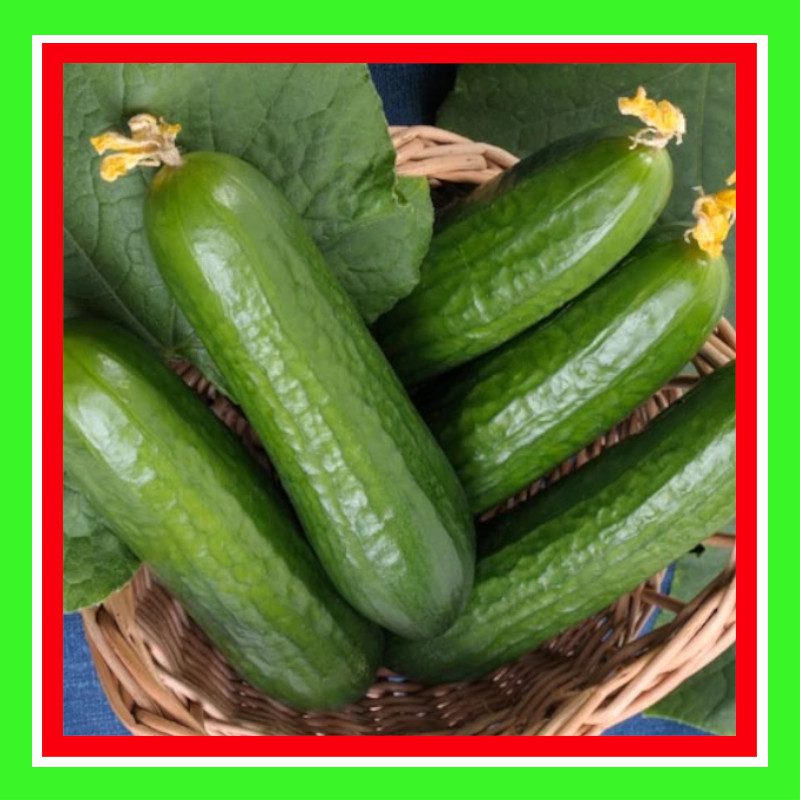
CUCUMBER-MUNCHER BURPLESS (TREATED)
$3.50
Shipping and taxes calculated at checkout
Cucumis sativus
CUCUMBER-MUNCHER BURPLESS plants produce a smooth, nearly spineless, medium green, low acid slicer that is very prolific and tender. Because of its low acidity, the Muncher is known as the "Burpless Cucumber", it won't give you wind (gas) like higher acid varieties. These tender beauties grow to 22cm long and can also be used for pickles. If picked when smaller they are great in salads and mature in just 58 days. Grows best in full sun with a regular water source.
Muncher Burpless Cucumber can be traced back to its parent species, Cucumis sativus, which is believed to have originated in the region of South Asia, including India and Pakistan. First domesticated in ancient times they were grown for their culinary uses as well as for their medicinal properties.
Sow in fertile well-drained soil. Sow seeds at least 20 cm (7.8 inches) apart in rows 90-120 cm (36-48 inches) apart if growing on a trellis or fence. Seeds can be started indoors.
SKU: CCMB-T
- Fast Australia-wide dispatch
- Secure checkout
- 30-day money-back guarantee
How to Grow Muncher Burpless Cucumber
- Muncher Burpless cucumbers prefer well-draining, fertile soil with a pH level between 6.0 and 7.0. Prepare the soil by loosening it to a depth of 30 cm (12 inches) and adding compost or well-rotted manure.
- Plant the seeds in spring, once the soil has warmed up to at least 18°C (65°F). Sow the seeds about 2 cm (0.75 inches) deep and space them about 45-60 cm (18-24 inches) apart. The plants prefer full sun but can tolerate some shade.
- Maintain water applications to keep a consistent moisture level in the soil. Thus, water the plants deeply and regularly, especially during hot and dry periods. Ideally, keep the soil consistently moist. Do not overwater or waterlogging will ruin your crop. Fertilise the plants once a month with a balanced fertiliser, following the package instructions.
- Common diseases are limited with Muncher Burpless cucumbers due to its hybrid breeding. It is resistant to many of the regular pests, including cucumber beetles and powdery mildew. However, it's still important to regularly check the plants for any signs of infestation and use insecticidal soap or neem oil to control the pests.
- Harvest when they are about 15-20 cm (6-8 inches) in length and have a dark green colour. To harvest, gently twist the fruit from the vine or use a pair of sharp scissors to cut it from the plant.
Heritage of Muncher Burpless Cucumber
Muncher Burpless Cucumber is a hybrid variety developed by the Northrup King Company, in the 1970s. It is a cross between the Japanese cucumber and the American slicing cucumber. The result is a disease-resistant plant that produces abundant, burpless fruit that is crisp and delicious. The Muncher Burpless cucumber is now a popular variety among home gardeners and commercial growers alike. Different cucumber varieties, including the Muncher Burpless Cucumber, have been selectively bred for specific qualities. These improved characteristics, such as taste, texture, disease resistance, and yield, are what make this cucumber what it is today. Many gardens, greenhouses, and commercial farms now grow Muncher Burpless Cucumber, thus contributing to the rich heritage and diversity of cucumber cultivation.*Important Note
These seeds are treated with a fungicide (Thiram), DO NOT eat the seeds or feed them to animals. Keep them away from children & animals. Wear gloves and thoroughly wash your skin with water & soap after touching the seeds. Treated seeds do not affect your crops or harm insects such as bees. These treated seeds are strictly for propagation or growing in the garden only. THE RESULTANT CROP IS EDIBLE. Fungicide seed treatment may be an AQIS (Biosecurity, Department of Agriculture, Water and the Environment, Government of Australia) requirement for certain seed varieties. Treated seeds may be dyed a distinct colour. Read the label on the seed packet before usage.| Plant Height | 24 - 36cm (1" - 1'2") |
|---|---|
| Season of Interest | Summer |
| Temperature Range | 19 - 32°C (66 - 90°F) |
| Annual / Perennial / Biennial | Annual |
| Frost Hardy / Tender | Tender |
| Sun Exposure | Full Sun |
| Sow Direct / Raise Seedlings | Sow direct or raise seedlings indoors 3-4 weeks before transplantin |
| Soil Type | Well-drained, fertile soil rich in organic matter |
| Soil pH | 6.0 - 6.8 |
| Soil Temperature | 18 - 21°C (64 - 70°F) |
| Seed Preparation | Soak seeds in water for 24 hours before sowing |
| Sowing Depth | 1-2 cm (0.5-1 inch) |
| Plant Spacing | 45-60 cm (18-24 inches) |
| Row Spacing | 90-120 cm (36-48 inches) |
| Watering | Regular watering, keeping soil consistently moist |
| Germination Time (Days) | 7 - 10 |
| Harvest Time (Days) | 55 - 65 |
| Good Companion Plants | Beans, Corn, Radishe, Nasturtiums |
| Bad Companion Plants | Potatoes, Aromatic herbs (dill, sage, rosemary) |
| Diseases | Powdery mildew, Downy mildew, Cucumber mosaic virus, Anthracnose |
| Not shipped to Tasmania | true |
| Seeds per pack | 25 |
| Min temperature (C) | 19 |
| Max temperature (C) | 32 |

CUCUMBER-MUNCHER BURPLESS (TREATED)
$3.50

More About Direct Compost Solutions
When I started this journey in 2009, I found nothing existed commercially, that was reasonably priced and easy to use. There was a homemade system which I also found was not that user-friendly.
Then a friend of mine told me about a homemade method she used. However, when I tried her method, I found this also didn't suit my needs, as it too had flaws that I considered where important. It did not keep vermin out, did not have a lockable lid and (to me) looked unsightly in the garden.
