

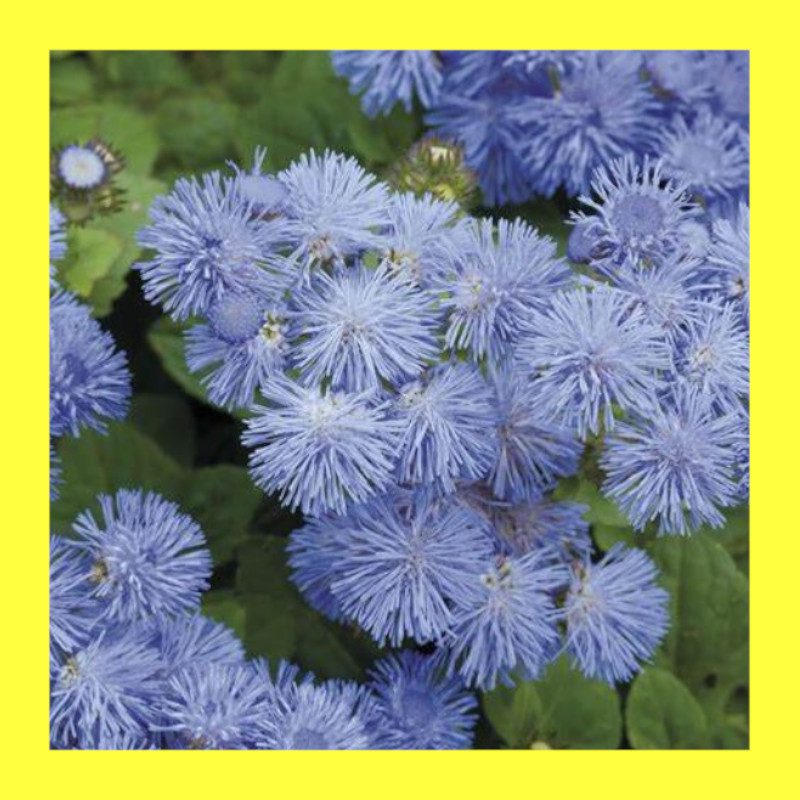
FLOWER-AGERATUM - MARKET GROWERS BLUE
$3.50
Shipping and taxes calculated at checkout
Seeds per pack:
2020
Ageratum Mexicana
Ageratum-Market Growers Blue is a tall flower with a beautiful blue/mauve colour. Highly scented and useful as a cut flower, they thrive in rich, well-drained soils with regular watering. Best planted straight into the garden during mid to late spring, Ageratum grows well in sun or partial shade, creating a stunning display from early summer to the first frost. Producing tight blue flower clusters they are classic fillers for mixed bouquets and are also known as Floss Flower, Blue Mink, Tall Blue, or Mexican Mirrors.
Surface sow and lightly cover the seeds, as they need light to germinate. Use a well-drained seed sowing mix at about 22°C. Gardeners prize them for their compact growth habit and ability to attract pollinators like bees and butterflies. With low maintenance requirements and a long blooming season they are ideal for borders, containers, and mass plantings. ,
When planting, ensure proper spacing for good air circulation, which helps prevent common pests and diseases. These flowers reach a height of 6-12 inches, & prefer well-drained soil with regular watering. Regularly deadhead spent blooms to encourage continuous flowering and keep the plants tidy. Whether you're an experienced gardener or a novice, Ageratum Market, Growers Blue flowers will add a burst of colour and charm to your garden, enhancing its beauty and attracting beneficial insects.
SKU: FLAMGB
- Fast Australia-wide dispatch
- Secure checkout
- 30-day money-back guarantee
How to grow Ageratum-Market Growers Blue
- Choose a site with full sun to partial shade.
- Sow seeds directly into the garden during mid to late spring. In tropical regions, sow anytime. Surface sow seeds and lightly cover them, as they need light to germinate.
- Use a well-drained seed sowing mix at about 22°C.
- Plant in rich, well-drained soils.
- Ensure proper spacing to allow for good air circulation and prevent common pests and diseases. Plants will grow up to 70 cm tall by 50 cm wide.
- Provide regular watering to keep the soil moist but not waterlogged.
- Seeds will germinate best at a temperature of about 22°C.
- Regularly deadhead spent blooms to encourage continuous flowering and keep plants tidy.
- Monitor for pests and diseases and take preventive measures as needed.
- Ageratum typically grows to be about 30-40cm tall. Provide support to the plants as they grow.
- Pinch off dead flowers to encourage new blooms
Additional tips
-
Start seeds indoors:
- Ageratum can be started from seed indoors, 8-10 weeks before the last frost date in your area. Sow the seeds in seed trays or pots filled with seed compost and cover with a plastic wrap or propagator lid to maintain humidity.
-
Transplant seedlings:
- Once the seedlings have grown to about 5-7cm tall and have at least two sets of true leaves, they can be transplanted into larger pots or into the garden.
-
Stratifying:
- Although not necessary, cold stratifying the seeds for a week before planting can sometimes improve germination rates. Place the seeds in a damp paper towel, put them in a plastic bag, and store them in the refrigerator.
-
Companion Planting:
- Plant Ageratum near vegetables and other flowers to deter harmful insects. Its strong scent can help repel pests such as whiteflies and aphids
-
Pinching Back:
- Is especially effective for preventing the plants from becoming too leggy
-
Fertilising:
- Ageratum prefers moderately fertile soil. Over Fertilising, especially with high-nitrogen fertilisers, can result in lush foliage at the expense of flowers
-
Humidity Tolerance:
- Ageratum can tolerate high humidity levels, making it an excellent choice for humid climates where other plants might struggle.
-
Edging and Ground Cover:
- Use Ageratum as a living mulch to suppress weeds. Their dense growth can help keep weed growth down around taller plants.
-
Cut Flowers Longevity:
- When using Ageratum as cut flowers, sear the cut ends of the stems with a flame or boiling water for a few seconds. This helps seal the stems and prolongs their vase life.
-
Pest Control:
- Although Ageratum is relatively pest-resistant, keep an eye out for spider mites and thrips. A strong spray of water can help dislodge these pests, or use an organic insecticidal soap if needed.
Heritage of Ageratum-Market Growers Blue
Ageratum-Market Growers Blue flowers have a rich heritage rooted in the tropical regions of Central and South America. The Ageratum genus, part of the Asteraceae family, encompasses various species known for their charming and vibrant blooms. Over the years, these flowers have been selectively bred for their striking blue colour and compact growth habit, making them a favourite among gardeners and horticulturists. The name "Ageratum" is derived from the Greek word "ageratos," meaning "unaging," which reflects the plant's long-lasting blooms. Ageratum Market Growers Blue, with its historical journey from the tropics to gardens worldwide, embodies the beauty and resilience that have made it a beloved choice for ornamental gardening.| Plant Height | 10 - 30 Height 20 - 30 wide busy growth |
|---|---|
| Season of Interest | All year round - avoid extreme cold or heat |
| Temperature Range | 16 - 21°C (61 - 70°F) |
| Annual / Perennial / Biennial | Biennial/Perennial |
| Frost Hardy / Tender | Half Hardy down to 5°C |
| Sun Exposure | Full sun, part shade |
| Sow Direct / Raise Seedlings | Sow Direct / Raise Seedlings |
| Soil Type | moist, rich, fertile well drained loam soil |
| Soil pH | 6 - 7 |
| Soil Temperature | 18 - 22°C (64 - 72°F) |
| Seed Preparation | No special preparation required |
| Sowing Depth | 3mm (⅛") |
| Plant Spacing | 20 - 30cm (¾" - 1⅛") |
| Row Spacing | 30 - 45cm (1⅛" - 1'6") |
| Watering | Prefers consistent moisture but not waterlogged soil, so water when the top 5cm of soil feels dry to the touch. |
| Germination Time (Days) | 7 - 14 |
| Harvest Time (Days) | 120 |
| Good Companion Plants | Dianthus, Lobella, Pansy, Marigold, Nastursium, Sweet Alyssum, Salvia, Basil, Chiives, Zinnias |
| Bad Companion Plants | Sunflower, Fennel, Dill, Srawberries. Brassicas, Legumes and nitshades |
| Pests | Aphids, Whiteflies, Spider Mites, Thrips, Leaf Miners, Cutworms, Slugs and Snails, Fungal Gnats |
| Diseases | Aphids, Grey Mould, Thrips, Whitefly, Botrytis blight, Powdery Mildew, Pythium root rot, Verticillium wilt, Bacterial leaf spot, Tobacco mosaic virus, Fusarium wilt |
| Not shipped to Tasmania | true |
| Seeds per pack | 2020 |
| Min temperature (C) | 16 |
| Max temperature (C) | 21 |

FLOWER-AGERATUM - MARKET GROWERS BLUE
$3.50

More About Direct Compost Solutions
When I started this journey in 2009, I found nothing existed commercially, that was reasonably priced and easy to use. There was a homemade system which I also found was not that user-friendly.
Then a friend of mine told me about a homemade method she used. However, when I tried her method, I found this also didn't suit my needs, as it too had flaws that I considered where important. It did not keep vermin out, did not have a lockable lid and (to me) looked unsightly in the garden.
