

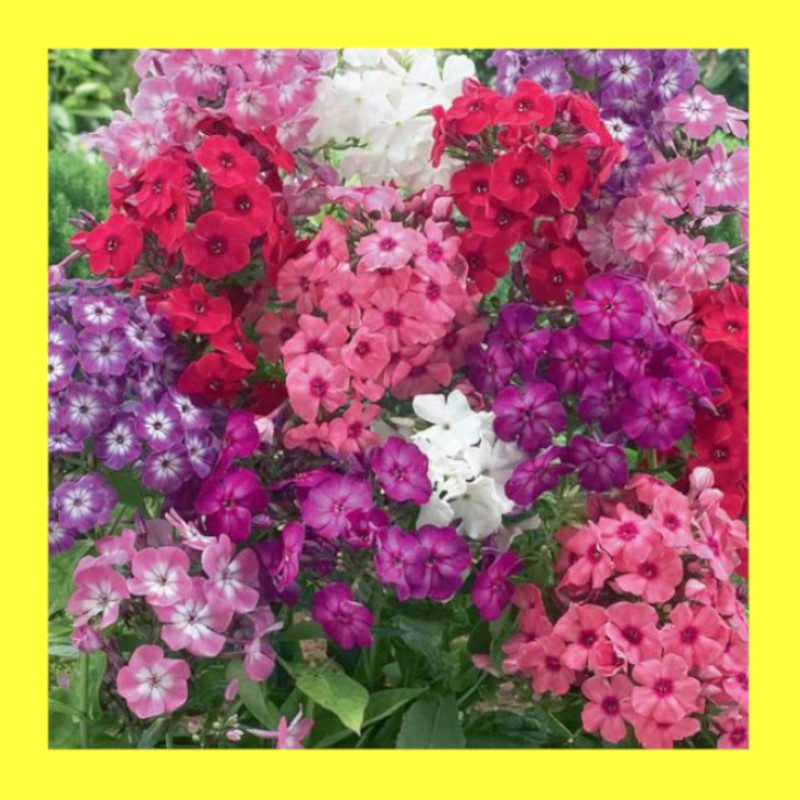
FLOWER-PHLOX-CECILY MIX
Shipping and taxes calculated at checkout
SKU: FLP-CM
- Fast Australia-wide dispatch
- Secure checkout
- 30-day money-back guarantee
Commonly used for hanging baskets, border planting or pot planting and often found in cottage gardens, it generally prefers cooler climates and does not like drought, wind, or heat. There are both annual and perennial varieties attracting bees and butterflies to your garden.
Plant in well-drained composted soil in full sun with peat moss or another acidic material as they prefer more acidic conditions. Sprinkle on surface of soil and cover lightly. No need to bury or over water. Dead head to produce more flowers, grow in clumps 15 to 30cm apart
| Plant Height | 20 - 30cm (¾" - 1⅛") |
|---|---|
| Season of Interest | Spring / Summer / Autumn |
| Temperature Range | 15 - 25°C (59 - 77°F) |
| Annual / Perennial / Biennial | Annual |
| Frost Hardy / Tender | Tender |
| Sun Exposure | Full Sun, Part Shade |
| Sow Direct / Raise Seedlings | Raise Seedlings |
| Soil Type | Well Drained,Fertile Soil with organic matter |
| Soil pH | 6 - 7 |
| Soil Temperature | 15 - 25°C (59 - 77°F) |
| Seed Preparation | No special preparation required |
| Sowing Depth | 3mm (⅛") |
| Plant Spacing | 15 - 20cm (⅝" - ¾") |
| Row Spacing | 30 - 45cm (1⅛" - 1'6") |
| Watering | Regular watering, do not let the soil dry out |
| Germination Time (Days) | 7 - 14 |
| Harvest Time (Days) | grown for its ornamental value and is not typically harvested. |
| Good Companion Plants | Sedum, Echinacea, Salvia, Coreopsis, Russian Sage |
| Bad Companion Plants | Brassicas, Nightshades, Alliums |
| Pests | Aphids, spider mites |
| Diseases | Powdery mildew, Grey mould, Root rot |
| Not shipped to Tasmania | true |
| Seeds per pack | 180 |
| Min temperature (C) | 15 |
| Max temperature (C) | 25 |

FLOWER-PHLOX-CECILY MIX
$3.50

More About Direct Compost Solutions
When I started this journey in 2009, I found nothing existed commercially, that was reasonably priced and easy to use. There was a homemade system which I also found was not that user-friendly.
Then a friend of mine told me about a homemade method she used. However, when I tried her method, I found this also didn't suit my needs, as it too had flaws that I considered where important. It did not keep vermin out, did not have a lockable lid and (to me) looked unsightly in the garden.
