

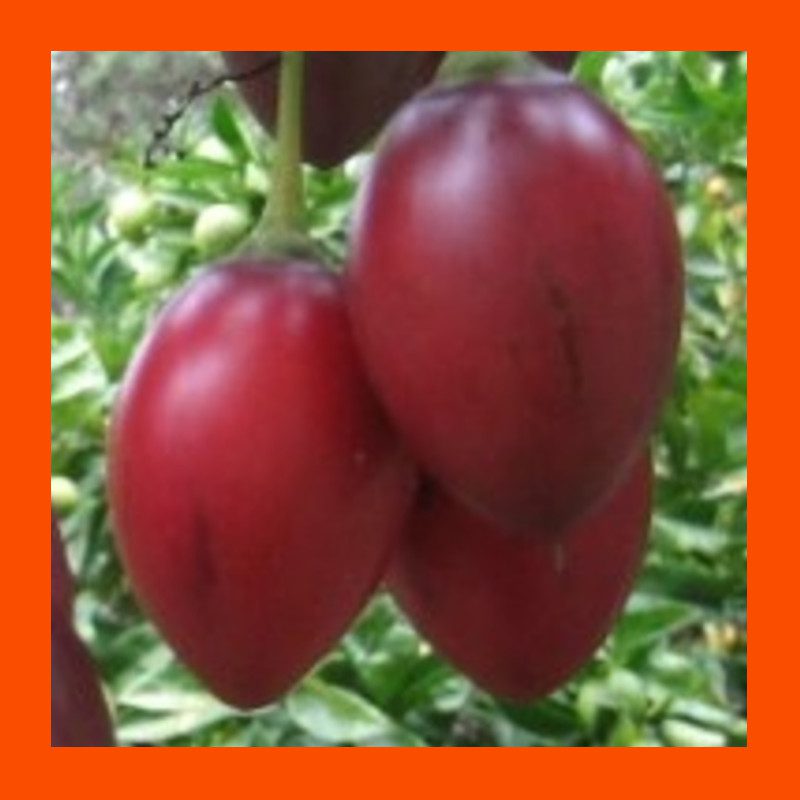
FRUIT-TREE-TAMARILLO
$3.20
Shipping and taxes calculated at checkout
Seeds per pack:
20
Solanum betaceum
FRUIT-TREE-TAMARILLO originates from south and central America. It is very useful small perennial tree with large green leaves. Grows up to 5m in height and has prolific nutritious hanging egg shaped edible fruits (but the skin is bitter). As it grows the leaves become huge (up to 40cm across). It is not a very drought tolerant plant so needs water during dry times. Will grow in a wide range of shade/sun and soil conditions. In warm climates it will produce fruit for about 10 months of the year from roughly January to October. Tolerates temperatures down to 2°c. Does not like being waterlogged.
Responds well to pruning thus kept at just the right height to suit your garden.
Plant in sheltered sunny position with well-drained fertile soil. 5mm deep 3m apart. Will not tolerate water-logging or drought.
SKU: FRT-T
- Fast Australia-wide dispatch
- Secure checkout
- 30-day money-back guarantee
How to Grow Fruit Tree-Tamarillo
To grow tree Tamarillo Fruit Tree just follow these steps:- Choose a sunny location with well-draining soil. Tamarillo trees prefer slightly acidic soil with a pH between 5.5-6.5.
- Prepare the soil by removing weeds and rocks and adding compost or organic matter to improve soil fertility.
- Purchase a young Tamarillo tree from a nursery or grow from seed. If growing from seed, start the seeds indoors 8-10 weeks before the last expected frost date. Transplant seedlings into the garden when they are about 15 to 20cm (6-8 inches) tall.
- Space the trees about 10-12 feet apart to allow for good air circulation and sunlight penetration.
- Water the trees regularly, especially during dry periods. Avoid overhead watering, as the leaves are susceptible to fungal diseases.
- Fertilise the trees with a balanced fertiliser every 4-6 weeks during the growing season.
- Prune the trees regularly to remove dead or diseased wood, crossing branches and to maintain an open, airy shape.
- Harvest the fruit when they are ripe, which is typically in late summer or early fall. The fruit will turn a reddish-purple colour and will feel slightly soft to the touch.
| Plant Height | 3 - 4 metres (10 - 13 feet) |
|---|---|
| Season of Interest | Late Summer / Autumn |
| Temperature Range | 15 - 25°C (59 - 77°F) |
| Annual / Perennial / Biennial | Perennial |
| Frost Hardy / Tender | Tender |
| Sun Exposure | Full Sun / Part Shade |
| Sow Direct / Raise Seedlings | Sow Direct / Raise Seedlings |
| Soil Type | Well drained fertile soil |
| Soil pH | 5.5 - 6.5 |
| Soil Temperature | at least 18 |
| Seed Preparation | Can be soaked in warm water for 24 hours prior to planting |
| Sowing Depth | 1 - 2mm (⅛") |
| Plant Spacing | 3 - 4 Metres |
| Row Spacing | 3 - 4 Metres |
| Watering | Regular watering; keep the soil consistently moist but avoid waterlogging |
| Germination Time (Days) | 2 - 4 Weeks |
| Harvest Time (Days) | 4 - 5 Months |
| Good Companion Plants | Beans, Basil, Carrots, Marigolds, Nasturtiums, Peppers |
| Bad Companion Plants | Brassicas (e.g. broccoli, cauliflower, cabbage), Nightshades (e.g. tomatoes, potatoes, eggplants), |
| Pests | Aphids,Whiteflies,Spider Mites,Tomato Hornworms,Thrips,Fruit Flies,Leafhoppers |
| Diseases | Bacterial canker, Phytophthora root rot, Verticillium wilt, Anthracnose, Fusarium wilt, |
| Not shipped to Tasmania | true |
| Seeds per pack | 20 |
| Min temperature (C) | 15 |
| Max temperature (C) | 25 |

FRUIT-TREE-TAMARILLO
$3.20

More About Direct Compost Solutions
When I started this journey in 2009, I found nothing existed commercially, that was reasonably priced and easy to use. There was a homemade system which I also found was not that user-friendly.
Then a friend of mine told me about a homemade method she used. However, when I tried her method, I found this also didn't suit my needs, as it too had flaws that I considered where important. It did not keep vermin out, did not have a lockable lid and (to me) looked unsightly in the garden.
