

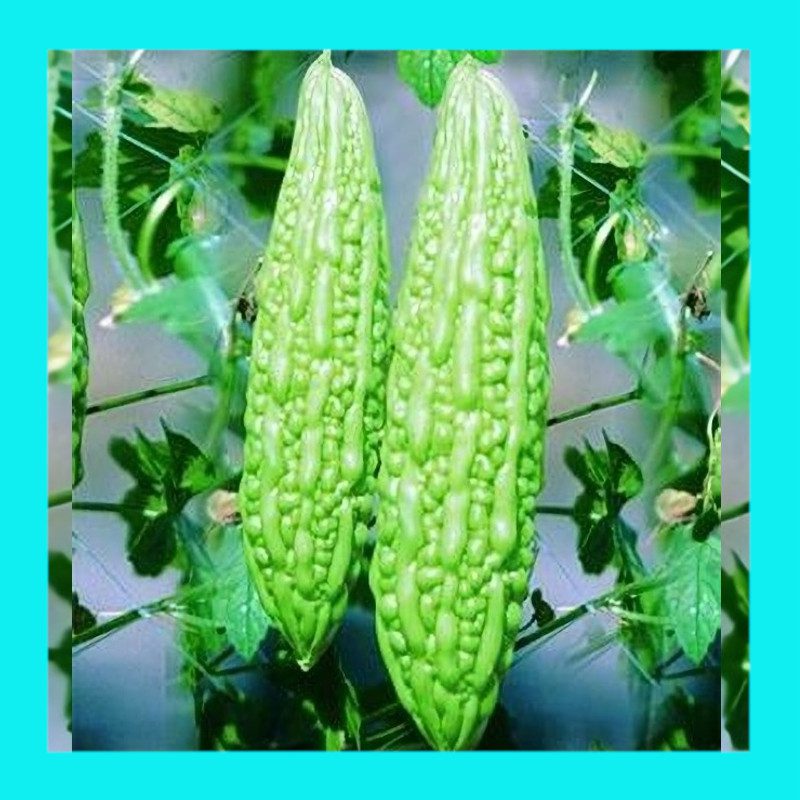
GOURD-BITTER MELON
$3.50
Shipping and taxes calculated at checkout
Seeds per pack:
5
Momordica charantia
GOURD-BITTER MELON, Balsam Pear is an Asian climber with small, fragrant flowers produces a warty fruit. It produces prolifically but may need hand pollination in cool climates. Sow next to a trellis, after all danger of frost has passed. To avoid excessive bitterness, pick the green fruit when young. Fruit is peeled, rubbed with salt and left for an hour then rinsed and the central spongy pith discarded. Seeds should not be eaten. Otherwise it can be parboiled in salted water before use. Used as a cooked vegetable & in pickles & curries.
Early plants can be sown in seedling pots for later transplanting. Prepare well-drained soil with compost & well-rotted manure. Young leaves & shoots are edible. Soil temp min. 22ºC.
SKU: GDBM
- Fast Australia-wide dispatch
- Secure checkout
- 30-day money-back guarantee
How to Grow Bitter Melon
- Bitter melon requires plenty of sunlight to grow properly. Choose a location that receives at least 6 hours of direct sunlight each day.
- Prepare the soil so it is well-drained soil rich in organic matter. Before planting, amend the soil with compost or well-rotted manure to improve soil fertility.
- Plant the seeds 2-3 cm (0.8-1.2 inches) deep and spaced about 90-120 cm (35-47 inches) apart.
- Water regularly to maintain consistent moisture to grow properly. Water the plants deeply once or twice a week, depending on the weather and soil conditions.
- Fertilise regularly as Bitter Melon is a heavy feeder and requires regular fertilisation to produce a healthy crop. Apply a balanced fertiliser every 4-6 weeks throughout the growing season.
- Provide support for your Bitter melon as it is a vine plant that requires support to grow properly. Install trellises or stakes to help the vines climb and stay off the ground.
- Harvest your Bitter Melon when the fruits are about 15-20 cm (6-8 inches) long. Pick your melons before the skin turns yellow and the seeds start to harden.
Heritage of Bitter Melon
Bitter melon (Momordica charantia) is believed to have originated in the Indian subcontinent, but it has a long history of cultivation and consumption across various regions of Asia, Africa, and the Caribbean. It is considered an ancient crop that has been used for centuries for its culinary and medicinal properties. Bitter melon has deep cultural and culinary roots in traditional cuisines, particularly in Asian countries such as India, China, and Southeast Asian nations. It is a staple ingredient in many dishes, known for its distinct bitter taste and unique flavor. Bitter melon is also highly valued for its potential health benefits and has been used in traditional medicine systems for its medicinal properties. As a result of its widespread cultivation and diverse culinary uses, bitter melon has developed various local and regional varieties and cultivars. These cultivars may have specific names and characteristics associated with the regions where they are grown, such as Bitter melon long and Japanese bitter melon, Chinese long, Indian, Thai. These varieties have their own unique traits and flavours, contributing to the rich heritage of bitter melon as a cherished vegetable in many cultures. SHOP Seeds| Plant Height | 200 - 400 cm (6.5 - 13 feet) |
|---|---|
| Season of Interest | Summer |
| Temperature Range | 20 - 30°C (68 - 86°F) |
| Annual / Perennial / Biennial | Annual |
| Frost Hardy / Tender | Tender |
| Sun Exposure | Full Sun |
| Sow Direct / Raise Seedlings | Raise Seedlings |
| Soil Type | Well-draining sandy loam soil |
| Soil pH | 6.0 - 6.5 |
| Soil Temperature | 20 - 30°C (68 - 86°F) |
| Seed Preparation | Soak seeds in warm water for 24 hours before sowing |
| Sowing Depth | 2.0 - 3.0mm (⅛") |
| Plant Spacing | 60 - 90cm (1'12" - 2'11") |
| Row Spacing | 150 - 180cm (4'11" - 5'11") |
| Watering | Regular watering to keep the soil moist but not waterlogged |
| Germination Time (Days) | 7 - 14 days |
| Harvest Time (Days) | 60 - 90 days |
| Good Companion Plants | Beans, Corn, Peas, Radish, Cucumber, Melons, Squash |
| Bad Companion Plants | Nightshade plants (tomatoes, peppers, eggplants), Potatoes |
| Pests | Aphids, Whiteflies, Spider Mites, Fruit Flies, Cucumber Beetles, Thrip, Fruit Borers, Leafhopper |
| Diseases | Powdery mildew, Downy mildew, Anthracnose, Fusarium wilt, Bacterial wilt, Root-knot nematodes |
| Not shipped to Tasmania | true |
| Seeds per pack | 5 |
| Min temperature (C) | 20 |
| Max temperature (C) | 30 |

GOURD-BITTER MELON
$3.50

More About Direct Compost Solutions
When I started this journey in 2009, I found nothing existed commercially, that was reasonably priced and easy to use. There was a homemade system which I also found was not that user-friendly.
Then a friend of mine told me about a homemade method she used. However, when I tried her method, I found this also didn't suit my needs, as it too had flaws that I considered where important. It did not keep vermin out, did not have a lockable lid and (to me) looked unsightly in the garden.
