

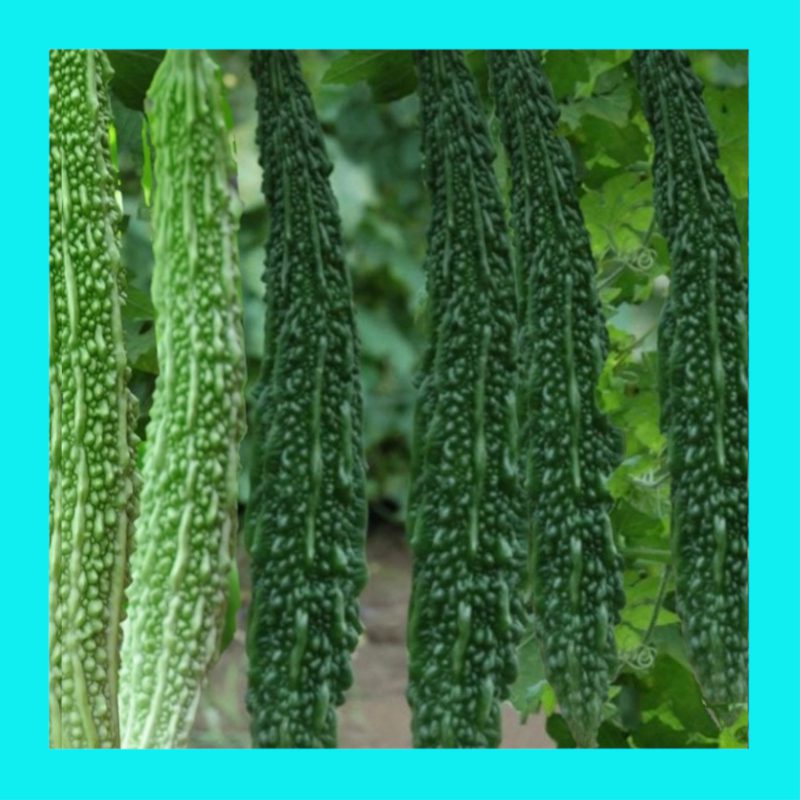
GOURD-BITTER MELON-LONG
$4.00
Shipping and taxes calculated at checkout
Seeds per pack:
5
Momordica charantia
GOURD-BITTER MELON-LONG gourds can grow up to 30cm long on herbaceous vines that can reach 5 meters long. Belonging to the Cucurbitaceous family there are two types commonly cultivated world wide that have slightly different appearances and flavour. And both are prepared in different ways for eating. The Chinese variety are generally lighter green and not as bumpy as the other Indian variety which usually has a darker yellowish green skin with more lumps and bumps. Both are found in India, Asia, Africa, Australia, Caribbean and other middles eastern countries.
Can be fried, steamed, boiled (added to soups), stuffed, made into a tea and even juiced along with other vegetables. The cucurbitacin's compounds in the flesh is what gives them their bitter flavor. Said to be a good source of vitamin C to reduce inflammation, improve the immune system, and boost collagen production. Plus vitamin A for healthy organ functioning, potassium to balance fluid levels, and some calcium for bones and teeth. Other elements include folate, iron, zinc, and fiber.
A sub-tropical / tropical vine can be planted directly into soil at the end of spring into early summer. If planting in a greenhouse they can be planted outside after the last front and when the temperate is around 21C. Plant is well drained composted soil on a trellis or fruit will rot if grown like a training plant where the fruit lies on the ground. The plant produces both male and female flowers which you will have to hand pollinate if growing indoor and catch the male flower before it drops off after only one day. Harvest the fruits when they are roughly 20cm long. The darker the colour the more bitter they are and the younger they are the less bitter they are.
Save the seeds from overripe yellow fruit, (seeds will be red) dry and store in a cool place. Mature fruit has brown and white seeds. They are easily dried and store lasting up to 2 to 3 years. Soak overnight before planting.
SKU: GDBML
- Fast Australia-wide dispatch
- Secure checkout
- 30-day money-back guarantee
How to Grow Bitter Melon Long
- Bitter melon requires plenty of sunlight to grow properly. Choose a location that receives at least 6 hours of direct sunlight each day.
- Prepare the soil for Bitter melon to thrive in well-drained soil that is rich in organic matter. Before planting, amend the soil with compost or well-rotted manure to improve soil fertility.
- Plant the seeds 1-2 cm (0.4-0.8 inches) deep and spaced about 60 cm (24 inches) apart.
- Water regularly to maintain consistent moisture to grow properly. Water the plants deeply once or twice a week, depending on the weather and soil conditions.
- Fertilise regularly as Bitter Melon is a heavy feeder and requires regular fertilisation to produce a healthy crop. Apply a balanced fertiliser every 4-6 weeks throughout the growing season.
- Provide support as Bitter Melon is a vine plant that requires support to grow properly. Install trellises or stakes to help the vines climb and stay off the ground.
- Harvest when the fruits are about 20-25 cm (8-10 inches) long. They should be picked before the skin turns yellow and the seeds start to harden.
Heritage Of Bitter Melon Long
While Bitter melon long and Japanese bitter melon and are different varieties of bitter melon, they both belong to the same species, Momordica charantia. Therefore, they share a similar heritage as bitter melon in general. They likely have a common origin in the Indian subcontinent and have been cultivated and adapted in different regions over time. However, due to regional preferences, cultivation practices, and natural selection, different local varieties and cultivars have emerged, each with its own unique characteristics. Japanese bitter melon and Bitter melon long are examples of such distinct cultivars that have been developed and maintained in specific regions. So, while they have a shared heritage as bitter melon, these specific cultivars may have slight variations in their flavor, appearance, and growth habits. The names and preferences associated with these varieties are often influenced by the regions where they are commonly grown or consumed, reflecting their specific cultural significance and culinary traditions.| Plant Height | 200 - 400 cm (6.5 - 13 feet) |
|---|---|
| Season of Interest | Summer |
| Temperature Range | 20 - 30°C (68 - 86°F) |
| Annual / Perennial / Biennial | Annual |
| Frost Hardy / Tender | Tender |
| Sun Exposure | Full Sun |
| Sow Direct / Raise Seedlings | Raise Seedlings |
| Soil Type | Well-draining sandy loam soil |
| Soil pH | 6.0 - 6.5 |
| Soil Temperature | 25 - 30°C (77 - 86°F) |
| Seed Preparation | Soak seeds in warm water for 24 hours before sowing |
| Sowing Depth | 2.0 - 3.0mm (⅛") |
| Plant Spacing | 60 - 90cm (1'12" - 2'11") |
| Row Spacing | 150 - 180cm (4'11" - 5'11") |
| Watering | Regular watering to keep the soil moist but not waterlogged |
| Germination Time (Days) | 7 - 14 days |
| Harvest Time (Days) | 60 - 90 days |
| Good Companion Plants | Beans, Corn, Peas, Radish, Cucumber, Melons, Squash |
| Bad Companion Plants | Nightshade plants (tomatoes, peppers, eggplants), Potatoes |
| Pests | Aphids, Whiteflies, Spider Mites, Fruit Flies, Cucumber Beetles, Thrip, Fruit Borers, Leafhopper |
| Diseases | Powdery mildew, Downy mildew, Anthracnose, Fusarium wilt, Bacterial wilt, Root-knot nematodes |
| Not shipped to Tasmania | true |
| Seeds per pack | 5 |
| Min temperature (C) | 20 |
| Max temperature (C) | 30 |

GOURD-BITTER MELON-LONG
$4.00

More About Direct Compost Solutions
When I started this journey in 2009, I found nothing existed commercially, that was reasonably priced and easy to use. There was a homemade system which I also found was not that user-friendly.
Then a friend of mine told me about a homemade method she used. However, when I tried her method, I found this also didn't suit my needs, as it too had flaws that I considered where important. It did not keep vermin out, did not have a lockable lid and (to me) looked unsightly in the garden.
