

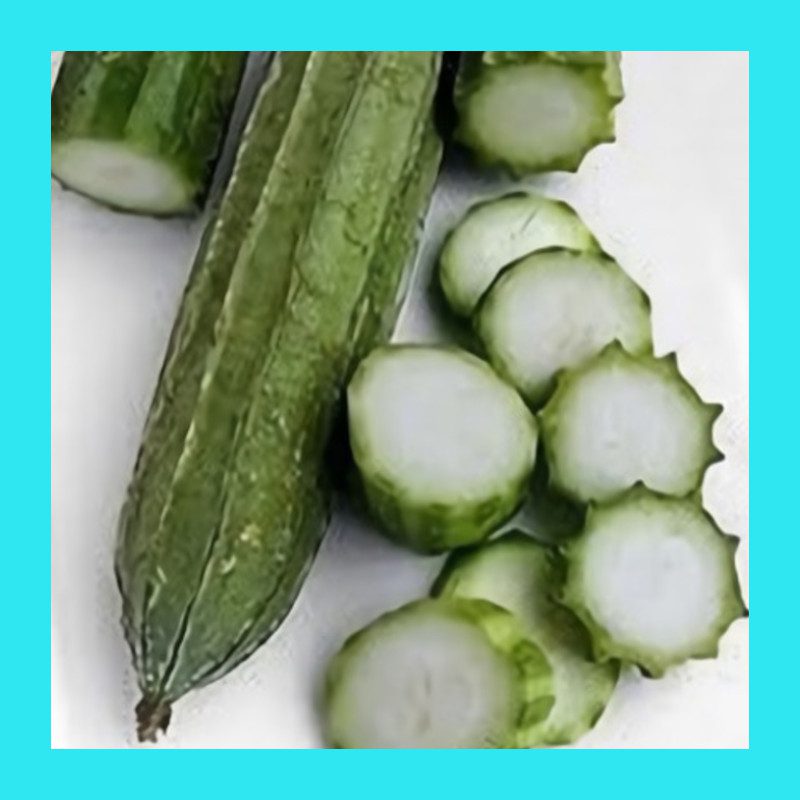
GOURD-LUFFA ANGLED-SIN QUA
$3.50
Shipping and taxes calculated at checkout
Seeds per pack:
10
Lagenaria siceraria
GOURD-LUFFA ANGLED-SIN QUA is a running annual vine with rounded leaves & yellow flowers, also called Chinese okra or ridged gourd. The plant has both male & female flowers. The rather large male flowers are bright yellow & occur in clusters. The female flowers are solitary & have the tiny slender ovary attached. The vigorous plant has a heavy fruit set of ridged, dark green, club-shaped fruits that are about 45cm long, 5cm in diametre. The leaves are covered with short hairs & the fruits are ribbed and cylindrical shaped. The young fruit can be used as a cooked vegetable or grown for the fibrous interior.
Soak seed in warm water for 2 hours before sowing. Germinate singly in pots, at 20-30°C on the surface of a good free draining, damp seed compost. Apply a sprinkling of compost or vermiculite, 6mm thick. Seal container inside a polythene bag until after germination. Do not exclude light at any stage as this is beneficial to germination.
SKU: GDLA-C
- Fast Australia-wide dispatch
- Secure checkout
- 30-day money-back guarantee
How to Grow Luffa Angled (Sin Qua)
- Luffa Angled prefers full sun and well-drained soil that is rich in organic matter. The soil pH should be between 6.0 and 7.5.
- Plant the seeds directly into the garden after the last frost. Sow the seeds to a depth of 2.5cm (1 inch) and space them 60cm (24 inches) apart. Keep the soil consistently moist until the seeds germinate, which typically takes 7-14 days. Or propagate in a pot following the info above.
- Support the plants as Luffa Angled grows as a vine and will need support as it grows. You can use a trellis or other support system to keep the plants off the ground.
- Sin Qua Luffa prefers consistently moist soil. Water the plants deeply once or twice a week, depending on the weather. Avoid over watering the plants, as this can lead to root rot.
- Fertilise the plants as Luffa Angled benefits from regular fertilisation. Use a balanced fertiliser every four to six weeks to promote healthy growth.
- Harvest the fruit when it is young and tender, typically when it is 10-15cm (4-6 inches) long. If you wait too long to harvest, the fruit will become tough and inedible.
- Dry the fruit completely on the vine before removing. Once dry, peel the outer skin to reveal the fibrous interior and use as a natural body scrubber or sponge.
| Plant Height | 150 - 300 cm (5 - 10 feet) |
|---|---|
| Season of Interest | Summer, Autumn |
| Temperature Range | 20 - 30°C (68 - 86°F) |
| Annual / Perennial / Biennial | Annual |
| Frost Hardy / Tender | Tender |
| Sun Exposure | Full Sun |
| Sow Direct / Raise Seedlings | sow direct after last frost / Raise seedlings indoors 3-4 weeks before the last frost |
| Soil Type | Well-draining sandy loam soil rich in organic matter |
| Soil pH | 6.0 - 6.8 |
| Soil Temperature | 18 - 24°C (64 - 75°F) |
| Seed Preparation | Soak seeds in warm water for 24 hours before planting |
| Sowing Depth | 2.0 - 3.0mm (⅛") |
| Plant Spacing | 45 - 60cm (1'6" - 1'12") |
| Row Spacing | 120 - 150cm (3'11" - 4'11") |
| Watering | Regular watering to keep the soil moist but not waterlogged |
| Germination Time (Days) | 5 - 10 days |
| Harvest Time (Days) | 70 - 90 days |
| Good Companion Plants | Beans, Corn, Radish, Carrots, Cucumbers, Marigolds, Nasturtiums |
| Bad Companion Plants | Potatoes, Tomatoes, Fennel, Dill |
| Pests | Aphids, Whiteflies, Spider Mites, Fruit Flies, Cucumber Beetles, Thrip, Fruit Borers, Leafhopper |
| Diseases | Powdery mildew, Downy mildew, Anthracnose, Fusarium wilt |
| Not shipped to Tasmania | true |
| Seeds per pack | 10 |
| Min temperature (C) | 20 |
| Max temperature (C) | 30 |

GOURD-LUFFA ANGLED-SIN QUA
$3.50

More About Direct Compost Solutions
When I started this journey in 2009, I found nothing existed commercially, that was reasonably priced and easy to use. There was a homemade system which I also found was not that user-friendly.
Then a friend of mine told me about a homemade method she used. However, when I tried her method, I found this also didn't suit my needs, as it too had flaws that I considered where important. It did not keep vermin out, did not have a lockable lid and (to me) looked unsightly in the garden.
