

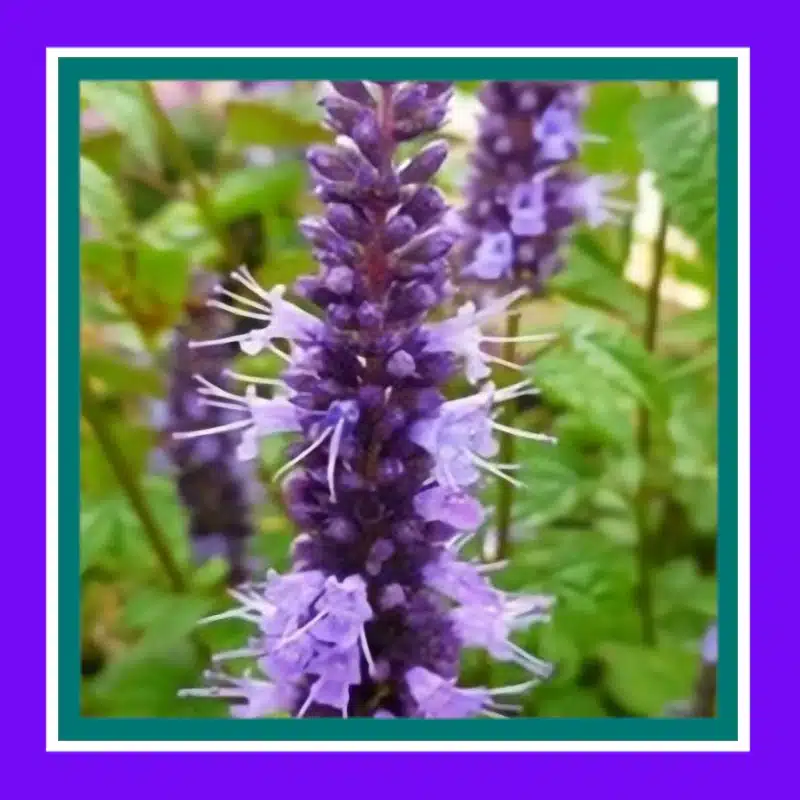
HERB-MINT-KOREAN (SALE)
$3.50
Shipping and taxes calculated at checkout
Seeds per pack:
23 Ysa
Agastache rugosa
HERB-MINT-KOREAN (SALE) is a fast-growing, aromatic perennial herb prized for its fragrant mint-and-liquorice-scented leaves and spikes of lavender-blue flowers that appear from midsummer to early autumn. Highly attractive to bees and butterflies, it makes a beautiful and practical addition to herb gardens, pots and borders. Widely used in stir-fries, herbal teas, and traditional remedies, Korean mint has a mild aniseed flavour and is both ornamental and useful.
Unlike many Agastache varieties, it tolerates higher moisture and humidity, with moderate drought and frost tolerance, and thrives in full sun to partial shade in well-drained soil. Sow seeds 12mm deep, with germination occurring in 10–30 days, and thin seedlings to 30cm apart as they grow. Keep soil moist until established, providing extra water until plants reach around 30cm in height.
Note: Korean mint can spread readily, so consider growing it in a container or a controlled garden space to prevent it from becoming invasive.
SKU: HMT-K-1
- Fast Australia-wide dispatch
- Secure checkout
- 30-day money-back guarantee
How to Grow Korean Mint
- Choose a location with full sun to partial shade and well-draining soil.
- Plant Korean mint seeds in the spring or start with nursery plants.
- Space the plants about 18-24 inches apart.
- Keep the soil consistently moist but not waterlogged.
- Fertilize the plants with a balanced fertilizer every 2-4 weeks during the growing season.
- Prune the mint regularly to encourage bushier growth and prevent flowering.
- Harvest the leaves regularly to encourage more growth.
- Korean mint can be prone to powdery mildew, so keep an eye out for any signs of this disease and treat as needed.
Additional growing tips for Korean Mint
- Crushing the leaves releases a strong scent that can help deter some garden pests naturally.
- Allowing a few plants to flower will dramatically increase bee and pollinator activity in your garden.
- Cutting the plant back hard mid-season can trigger a fresh flush of tender, more flavourful growth.
- Korean mint self-seeds readily—expect new plants to appear nearby the following season.
- The flavour is strongest just before flowering, making this the best time to harvest for teas.
- Plants can become woody at the base over time—replacing them every couple of years keeps growth vigorous.
- It tolerates light drought once established, but flavour improves with consistent moisture.
- Growing in pots helps control spreading and makes harvesting easier at waist height.
- Leaves can lose intensity after heavy rain—harvest before wet weather for best flavour.
- Works well as a companion plant near vegetables to attract beneficial insects that help with pest contro
Heritage of Korean Mint
Korean mint (Agastache rugosa), also known as wrinkled giant hyssop, is native to East Asia, particularly Korea, China, and Japan, where it has grown wild for centuries in open meadows and forest edges. It has a long history in traditional herbal medicine across these regions, where it was valued for supporting digestion and general wellbeing. Over time, its reliability and adaptability have seen it spread beyond its native range, becoming a well-established herb in gardens around the world.| Plant Height | 30 - 60 cm (1 - 2 feet) |
|---|---|
| Season of Interest | Summer to early Autumn |
| Temperature Range | 10 - 24°C (50 - 75°F) |
| Annual / Perennial / Biennial | Perennial |
| Frost Hardy / Tender | Frost Hardy |
| Sun Exposure | Part Shade to Full Sun |
| Sow Direct / Raise Seedlings | Raise seedlings |
| Soil Type | Moist, well-drained soil |
| Soil pH | 6.0 - 7.5 |
| Soil Temperature | 10 - 20 °C (50 - 68 °F) |
| Seed Preparation | None required |
| Sowing Depth | 0.6 cm (0.25 inches) |
| Plant Spacing | 20 - 30 cm (8 - 12 inches) |
| Row Spacing | 30 cm (12 inches) |
| Watering | Moderate to high |
| Germination Time (Days) | 7 - 14 days |
| Harvest Time (Days) | 60 - 90 days |
| Good Companion Plants | Cabbage, Kale, Tomatoes |
| Bad Companion Plants | Parsley |
| Pests | Aphids, Spider mites, Mint Flea Beetle |
| Diseases | Rust, Powdery mildew |
| Not shipped to Tasmania | true |
| Seeds per pack | 23 Ysa |
| Min temperature (C) | 10 |
| Max temperature (C) | 24 |

HERB-MINT-KOREAN (SALE)
$3.50

More About Direct Compost Solutions
When I started this journey in 2009, I found nothing existed commercially, that was reasonably priced and easy to use. There was a homemade system which I also found was not that user-friendly.
Then a friend of mine told me about a homemade method she used. However, when I tried her method, I found this also didn't suit my needs, as it too had flaws that I considered where important. It did not keep vermin out, did not have a lockable lid and (to me) looked unsightly in the garden.
