

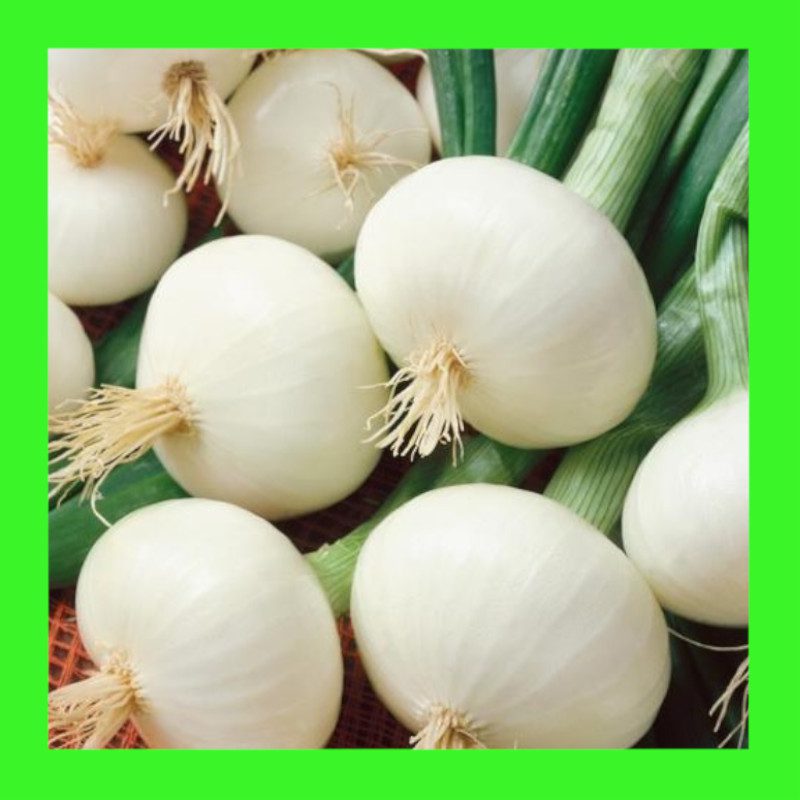
ONION-CIPOLLINI-WHITE
$3.20
Shipping and taxes calculated at checkout
Allium cepa
ONION-CIPOLLINI-WHITE (Chip-oh-Lee-nee)is a gourmet Italian onion that is incredibly sweet, the flavor is mild & well developed. The name literally means "little onion" in Italian, and indeed they are! Cipollini’s are about the size of a golf ball with a slightly flattened appearance. They're thin-skinned and have translucent white flesh with more residual sugar than your average yellow or white onion. Which makes them incredible for roasting or caramelizing? Roasted whole in the oven or cooked in a little butter on the stove top, Cipollini’s become soft and practically melt in your mouth. Those residual sugars caramelize and concentrate, leaving behind none of the astringent raw onion flavour. Seriously, you haven't had caramelized onions until you've made them with Cipollini. Even the onion-haters out there might be swayed! The only downside to them is getting that thin skin off. Use a small knife to pull off strips from root to stem. You can also boil the onions for a few seconds to loosen the skin. It's a pain, but definitely worth it for the sweet onions beneath.
Rows should be about 30cm apart, or if planted in dense beds, 12.5cm apart in triangles for the best use of space. Thin or transplant seedlings as needed to open spacing or fill empty spots.
SKU: OC-W
- Fast Australia-wide dispatch
- Secure checkout
- 30-day money-back guarantee
How to Grow Cipollini White Onions
Cipollini White Onions are a small, flattened variety of onion that originated in Italy. They are known for their sweet and mild flavour and are often used in Italian cuisine. In this article, we'll take a look at how to grow Cipollini White onions in both metric and imperial units and Celsius and Fahrenheit temperatures.- Look for heritage or heirloom seeds if possible, as these are often more flavorful and hardy.
- Onions prefer full sun, but they can also tolerate some shade. Make sure the soil is well-draining and rich in organic matter.
- Sow the seeds directly into the soil, about 1cm (0.4 inches) deep, and 10cm (4 inches) apart. If planting in rows, space them 30-45cm (12-18 inches) apart.
- Water regularly to keep the soil moist but not waterlogged. Water deeply once a week, or more often if the weather is particularly hot or dry.
- Thin the seedlings once the seedlings have emerged, Thin them out to give them more room to grow. Space them 5-7.5cm (2-3 inches) apart.
- Fertilise sparingly as onions don't require a lot of fertiliser, but a balanced fertiliser can help promote growth. Apply a slow-release fertiliser once a month.
- Harvest your onions when the tops begin to yellow and fall over. Simply lift them out of the ground with a garden fork or shovel.
| Plant Height | 30 - 45 cm (1 - 1.5 feet) |
|---|---|
| Season of Interest | Late Summer to Autumn |
| Temperature Range | 15 - 25°C (59 - 77°F) |
| Annual / Perennial / Biennial | Biennial (grown as an Annual) |
| Frost Hardy / Tender | Tender |
| Sun Exposure | Full Sun |
| Sow Direct / Raise Seedlings | Sow Direct or Raise Seedlings |
| Soil Type | Well-drained, fertile soil |
| Soil pH | 6.0 - 7.0 |
| Soil Temperature | 10 - 20 °C (50 - 68 °F) |
| Seed Preparation | No special preparation required |
| Sowing Depth | 1 cm (1/2 inch) |
| Plant Spacing | 7 - 10 cm (3 - 4 inches) |
| Row Spacing | 30 - 45 cm (12 - 18 inches) |
| Watering | Regular watering, especially during dry spells |
| Germination Time (Days) | 7 - 14 days |
| Harvest Time (Days) | 80 - 100 days |
| Good Companion Plants | Carrots, Lettuce, Spinach, Tomatoes, Beets, Chamomile, Marigolds, Basil, Sage |
| Bad Companion Plants | Peas, Beans, Brassicas (such as broccoli, cauliflower, and cabbage), Garlic, Shallots |
| Pests | Onion Maggots, Nematodes |
| Diseases | Downy mildew, White rot, Fusarium basal rot, Smut, Botrytis leaf blight |
| Not shipped to Tasmania | true |
| Seeds per pack | 150 |
| Min temperature (C) | 15 |
| Max temperature (C) | 25 |

ONION-CIPOLLINI-WHITE
$3.20

More About Direct Compost Solutions
When I started this journey in 2009, I found nothing existed commercially, that was reasonably priced and easy to use. There was a homemade system which I also found was not that user-friendly.
Then a friend of mine told me about a homemade method she used. However, when I tried her method, I found this also didn't suit my needs, as it too had flaws that I considered where important. It did not keep vermin out, did not have a lockable lid and (to me) looked unsightly in the garden.
