

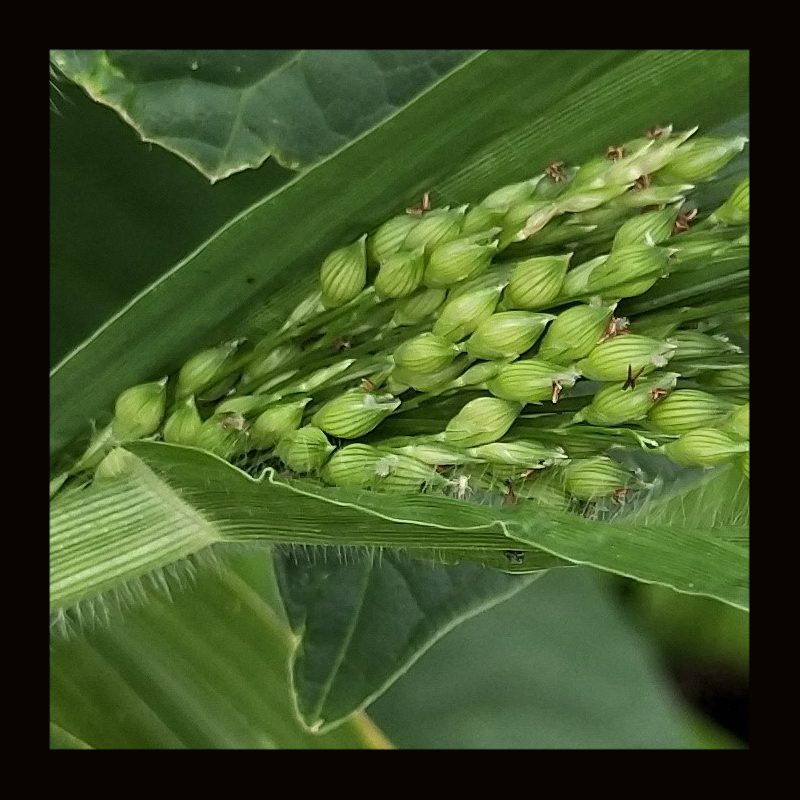
OTHER-MILLET-WHITE PROSO (11G)
$3.50
Shipping and taxes calculated at checkout
Seeds per pack:
2300
Panicum miliaceum
OTHER-MILLET-WHITE PROSO (33G)is one of the oldest of the cultivated Millets known for its adaptability and nutritional value. A versatile, resilient cereal crop, these small grain seeds are mainly used for fodder, bird seed, cereal to make bread, baby food, porridge, or fermented into a beverage and of course as a green manure crop. Other know millets are Foxtail, Finger, Pearl, and Little Millet, French White Millet, Common Millet, Hog Millet. Millets are warm season plants so grow best in summer.
White Proso Millet is rich in protein, fiber, and essential minerals, making it a nutritious addition to both human and animal diets. Its resilience to drought and ability to grow in poor soil conditions make it an excellent choice for sustainable agriculture, particularly in arid and semi-arid regions. Additionally, its relatively short growing season allows for multiple harvests within a year or as a rotation crop, enhancing soil health and productivity.
Sow by broadcasting over the garden bed and covering lightly with soil or plant in furrows 3 – 4 cm deep. Will grow in dry conditions but will still need watering once a week and semi- fertile well drained soil. Can self-seed so collect seeds before they fall. Grows well with legumes up to 1.5 meters tall. Soil Temp 21°C. Matures 60-100 days. Super easy to save seeds for next years grop.
SKU: O-MWP
- Fast Australia-wide dispatch
- Secure checkout
- 30-day money-back guarantee
How to grow White Proso Millet
- White proso millet prefers a location that receives full sun and has well-draining soil. It can tolerate a wide range of soil types, including sandy and clay soils, but it prefers soil that is slightly acidic, with a pH between 5.5 and 7.0.
- Before planting, prepare the soil by removing any debris or weeds, and till the soil to a depth of 6-8 inches. White proso millet is not a heavy feeder, but it will benefit from the addition of a balanced fertiliser, such as a 10-10-10 or a 5-10-10.
- White proso millet seeds can be sown directly in the garden after the last frost date in your area, or started indoors 4-6 weeks before the last frost date. The seeds can be sown at a rate of about 1.8 to 2.26kgs (4-5 pounds) per acre, or about 0.02 to 0.05kgs (1-2 ounces) per 9.2sq meters (100 square feet). Sow the seeds 0.6cm (1/4 inch) deep and about 2.25sm (1 inch) apart or cast loosley over the soil and cover lightly with fines.
- Keep the soil consistently moist until the seedlings are established. Then, water as needed to keep the soil from drying out. Fertilise with a balanced fertiliser, such as a 10-10-10, when the plants are about 15cm (6 inches) tall, and again when the plants are about 30cm (12 inches) tall.
- White proso millet can be sensitive to competition from weeds, so it is important to keep the area around the plants free of weeds. You can use mulch or hand pull the weeds. I found when growing with other green manuer plants there was very litte weeding needed.
Heritage of White Proso Millet
White Proso Millet has a storied heritage, believed to have been first domesticated in East Asia over 4000 years ago. It spread across continents, becoming a key grain in various cultures due to its nutritional benefits and robust growth characteristics. Today, it continues to be a valuable crop both for its agricultural advantages and its contribution to diverse diets around the world. White Proso Millet's combination of resilience, nutritional value, and versatility makes it an important crop in sustainable agriculture and a nutritious option in modern diets.| Plant Height | 100-120 cm (3-4 feet) |
|---|---|
| Season of Interest | Summer |
| Temperature Range | 20-30°C (68-86°F) |
| Annual / Perennial / Biennial | Annual |
| Frost Hardy / Tender | Tender |
| Sun Exposure | Full Sun |
| Sow Direct / Raise Seedlings | Sow Direct |
| Soil Type | Well-drained, fertile soil |
| Soil pH | 5.5-7.5 |
| Soil Temperature | 20-25°C (68-77°F) |
| Seed Preparation | No special preparation required; ensure seeds are dry and clean |
| Sowing Depth | 1-2 cm (0.4-0.8 inches) |
| Plant Spacing | 10-15 cm (4-6 inches) |
| Row Spacing | 20-30 cm (8-12 inches) |
| Watering | Moderate; keep soil consistently moist but not waterlogged |
| Germination Time (Days) | 7-14 days |
| Harvest Time (Days) | 60-90 |
| Good Companion Plants | Legumes. Sunflowers, Sorghum, Clover, Amaranth |
| Bad Companion Plants | Wheat, Rye, Corn, Potatoes, Tomatoes |
| Pests | Grasshoppers, Aphids, Armyworms, Birds, Cutworms |
| Diseases | Leaf Blight (Bipolaris maydis), Smut (Ustilago crameri), Rust (Puccinia spp.), Downy Mildew (Sclerospora graminicola). Ergot (Claviceps spp) |
| Not shipped to Tasmania | true |
| Seeds per pack | 2300 |
| Min temperature (C) | 20 |
| Max temperature (C) | 30 |

OTHER-MILLET-WHITE PROSO (11G)
$3.50

More About Direct Compost Solutions
When I started this journey in 2009, I found nothing existed commercially, that was reasonably priced and easy to use. There was a homemade system which I also found was not that user-friendly.
Then a friend of mine told me about a homemade method she used. However, when I tried her method, I found this also didn't suit my needs, as it too had flaws that I considered where important. It did not keep vermin out, did not have a lockable lid and (to me) looked unsightly in the garden.
