

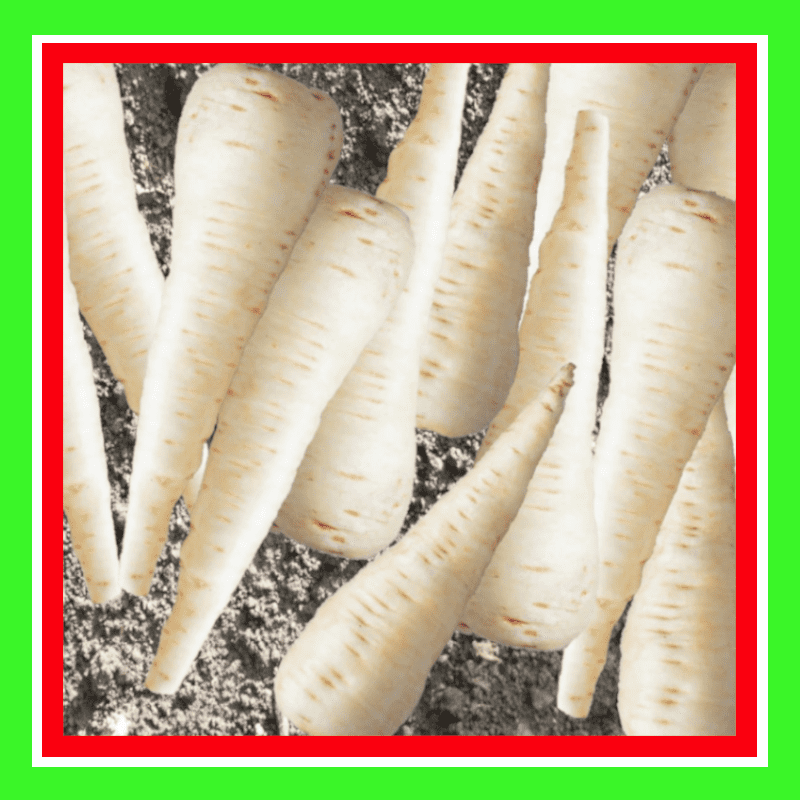
PARSNIP-MELBOURNE WHITESKIN (TREATED)
$3.50
Shipping and taxes calculated at checkout
Pastinaca sativa
PARSNIP-MELBOURNE WHITESKIN (TREATED) is an old Australian variety with a smooth skin, white tapered roots and sweet nutty flavour. The flavour gets better over winter. Not affected by pests and disease. In cool climates sow from August to January, warm climates August to March, tropics February to September.
Sow 1cm deep, 7cm apart, and space rows 40cm apart with full sun in good composted soil. Melbourne Whiteskin Parsnips can be fried, baked, turned into chips or used in soup and stocks. A good nutritious all round hardy vegetable.
Any seeds coming from overseas must now be treated with a pesticide to avoid releasing an unknown pest into the Australian environment.
SKU: PS-MW-T
- Fast Australia-wide dispatch
- Secure checkout
- 30-day money-back guarantee
How to grow Parsnip Melbourne Whiteskin (Treated)
- Parsnips grow best in loose, deep, well-drained soil that is rich in organic matter. Add compost or well-rotted manure to the soil before planting to improve its quality.
- Sow seeds directly into the garden bed in early spring, after the last frost. Plant the seeds 1-2 cm deep, spaced 5cm apart in rows that are 30cm apart. Germination can take 2-4 weeks, so be patient.
- When the seedlings have grown to around 2cm high, thin them out so that they are 10-15 cm apart. This will give each parsnip enough room to grow.
- Water Parsnips regularly, especially during dry spells. Keep the soil moist but not waterlogged. Be careful not to wash away the seeds or young seedlings when watering.
- Fertilise the plants with a balanced organic fertiliser when they are around 10cm tall. This will provide them with the nutrients they need to grow.
- Keep the area around the parsnips weed-free. Weeds compete with the plants for nutrients and water, which can slow down their growth.
- Harvest your Melbourne Whiteskin Parsnips when the roots are around 2.5-5cm in diameter. Use a fork to gently lift them out of the ground. The flavour of Melbourne Whiteskin parsnips improves after is has been exposed to frost, so leave them in the ground until late autumn or early winter.
Heritage of Parsnip Melbourne Whiteskin (Treated)
Parsnips (Pastinaca sativa) are believed to have originated in the Mediterranean region and have been cultivated for centuries for their edible roots. The cultivation and improvement of parsnip varieties have taken place over generations, often in local or regional contexts. Specific cultivars like "Melbourne Whiteskin" Parsnip might have been developed by local gardeners, breeders, or agricultural enthusiasts, Specific cultivars like "Melbourne Whiteskin" Parsnip have been developed by local gardeners, breeders, or agricultural enthusiasts, with the aim of producing parsnips that are well-suited to the climate and growing conditions of Melbourne or its surrounding areas. Local variations and heirloom cultivars like "Melbourne Whiteskin" Parsnip can carry unique traits that local conditions. These traits might include improved flavour, disease resistance, adaptability to local soil and climate conditions, or aesthetic qualities like root colour. *Important Note
These seeds are treated with a fungicide (Thiram), DO NOT eat the seeds or feed them to animals. Keep them away from children & animals. Wear gloves and thoroughly wash your skin with water & soap after touching the seeds. Treated seeds do not affect your crops or harm insects such as bees. These treated seeds are strictly for propagation or growing in the garden only. THE RESULTANT CROP IS EDIBLE.
Fungicide seed treatment may be an AQIS (Biosecurity, Department of Agriculture, Water and the Environment, Government of Australia) requirement for certain seed varieties. Treated seeds may be dyed a distinct colour.
| Plant Height | 30 - 60cm (1⅛" - 1'12") |
|---|---|
| Temperature Range | 15 - 25°C (59 - 77°F) |
| Annual / Perennial / Biennial | Biennial (usually grown as an annual) |
| Frost Hardy / Tender | Hardy |
| Sun Exposure | Full sun or part shade |
| Sow Direct / Raise Seedlings | Sow Direct |
| Soil Type | loose, friable, well-drained soil, plus organic matter |
| Soil pH | 6.0 - 7.6 |
| Soil Temperature | 10 - 20°C (50 - 68°F) |
| Seed Preparation | Soak seeds in warm water for a few hours before planting |
| Sowing Depth | 1.5 cm (0.6 inches) |
| Plant Spacing | 7-10 cm (3-4 inches) |
| Row Spacing | 30-45 cm (12-18 inches) |
| Watering | Regular, even moisture |
| Germination Time (Days) | 15 - 28 |
| Harvest Time (Days) | 91 - 140 |
| Good Companion Plants | Peas, Potatoes, Beans, Radish, Garlic, Peppers, Tomatoes, Lettuce, Rosemary, Sage, Carrot, Onion |
| Bad Companion Plants | Celery, Parsley, Potatoes |
| Pests | Aphids, Carrot fly |
| Diseases | Cavity spot, Leaf spot |
| Not shipped to Tasmania | true |
| Seeds per pack | 50 |
| Min temperature (C) | 15 |
| Max temperature (C) | 25 |

PARSNIP-MELBOURNE WHITESKIN (TREATED)
$3.50

More About Direct Compost Solutions
When I started this journey in 2009, I found nothing existed commercially, that was reasonably priced and easy to use. There was a homemade system which I also found was not that user-friendly.
Then a friend of mine told me about a homemade method she used. However, when I tried her method, I found this also didn't suit my needs, as it too had flaws that I considered where important. It did not keep vermin out, did not have a lockable lid and (to me) looked unsightly in the garden.
