

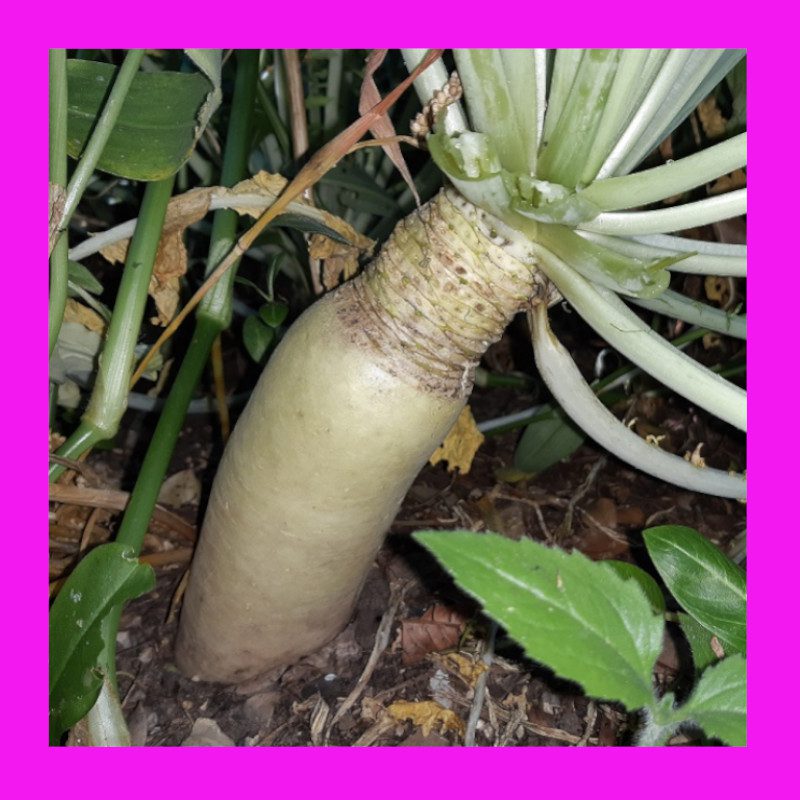
RADISH-DAIKON
$3.50
Shipping and taxes calculated at checkout
Seeds per pack:
210
Raphanus sativus
RADISH-DAIKON-in an oriental Japanese radish commonly used in Japanese cuisine. This mild flavoured versatile crop is great for many Asian dishes, salads, shredded or pickled, or served as a garnish with sashimi. Daikons are a large, white slightly tapered root vegetable that can grow from 46 to 61 cm long. Its pure white flesh is crisp & tender though slightly sweet and spicy with a mild bite. They store well and are highly nutritious, being rich in vitamin C, fibre, and antioxidants.
SKU: RD-A
- Fast Australia-wide dispatch
- Secure checkout
- 30-day money-back guarantee
How to Grow Daikon Radish
- Daikon radishes prefer well-draining soil with a pH of 6.0 to 7.0. Prepare the soil by loosening it to a depth of 30 cm (12 inches) and mix in compost or well-rotted manure to improve its fertility.
- Sow Daikon radish seeds directly into the soil in rows spaced 45-60 cm (18-24 inches) apart, and plant the seeds 2-3 cm (1 inch) deep. Keep the soil moist, but not waterlogged, during germination.
- Grown best in full sun but can tolerate some shade. They prefer cooler temperatures between 15-25°C (60-75°F) and will bolt (flower prematurely) in hot weather.
- Thin out once the radish seedlings are 5-10 cm (2-4 inches) tall, to 10-15 cm (4-6 inches) apart to give them enough space to grow. Thinning also helps to reduce competition for nutrients and water.
- Water regularly to keep the soil moist but not waterlogged. Add a balanced fertiliser every two weeks to encourage healthy growth.
- Harvest Daikon radishes in about 60-70 days. The radishes should be about 7-10 cm (3-4 inches) in diameter and the root should be firm and crispy. To harvest, gently pull the radishes out of the soil by the leaves.
Heritage of Daikon Radish
Daikon radish, aka Japanese radish, Oriental radish, or Chinese radish, has a rich heritage in Asian cuisines. Its origins can be traced back to Southeast Asia, and it has been cultivated in China and Japan for centuries. Daikon radish is a staple in various Asian dishes, often pickled, stir-fried, or used in soups. Over time, different varieties have been developed, each with its unique characteristics, contributing to the cultural and culinary diversity associated with this versatile radish.Other Interesting Facts of Daikon Radish
-
Companion Planting:
- Daikon radishes can be used as a companion plant. They release chemicals that may help deter pests. Consider planting them alongside other vegetables susceptible to pests.
-
Biofumigation:
- Daikon radishes are known for biofumigation properties. When the plants are chopped and incorporated into the soil, they release compounds that can suppress soil-borne pests and diseases. Link to article on Bio fumigants. https://www.publications.qld.gov.au/ckan-publications-attachments-prod/resources/a3694e67-0b1c-4972-a290-b8606a7c7360/guide-to-brassica-biofumigant-cover-crops.pdf?ETag=ffdbfa3f219d346851857a7b5ae9c6ed
-
Soil Aeration:
- Daikon radishes have deep taproots that can penetrate compacted soil, helping to break it up and improve aeration. This makes them excellent for planting in areas where soil compaction is a concern.
-
Cover Cropping:
- Use Daikon radishes as cover crops during the fall and winter. They can protect the soil from erosion and nutrient leaching, and their decomposition adds organic matter to the soil.
-
Winter Foraging:
- If you're in a mild winter climate, Daikon radishes can be left in the ground during the winter. Animals, such as deer, may forage on them, providing a natural and nutritious food source. Though I doubt this is a consideration in Australia unless you have a deer farm perhaps.
-
Pickling and Fermentation:
- Daikon radishes are not only great for fresh consumption but also for pickling and fermentation. Experiment with different pickling or fermenting recipes to enjoy them in a variety of ways.
-
Seed Saving:
- Daikon radishes produce seeds that can be saved for the next growing season. Allow some plants to bolt and flower, then collect the seeds for replanting.
-
Varietal Exploration:
- Explore different varieties of Daikon radishes. Some have unique shapes, colours, and flavours. Trying different varieties can add diversity to your garden and culinary experiences.
-
Mulching with Radish Leaves:
- After harvesting the radish roots, consider using the leaves as a mulch. Chop them up and spread them around your garden to add organic matter and nutrients back into the soil.
-
Radish Greens Pesto:
- Don't discard the radish greens! They can be used to make a flavorful pesto. Blend the greens with garlic, nuts, Parmesan cheese, and olive oil for a tasty and nutritious condiment.
| Plant Height | 30-90 cm (1-3 feet) |
|---|---|
| Season of Interest | Spring / Autumn |
| Temperature Range | 10 - 24°C (50 - 75°F) |
| Annual / Perennial / Biennial | Annual |
| Frost Hardy / Tender | Hardy |
| Sun Exposure | Full Sun |
| Sow Direct / Raise Seedlings | Sow Direct |
| Soil Type | Well-drained, loose soil rich in organic matter |
| Soil pH | 5.8-6.8 |
| Soil Temperature | 10 - 24°C (50 - 75°F) |
| Seed Preparation | Soak seeds in warm water overnight before planting to speed up germination |
| Sowing Depth | 1.3 cm (1/2 inch) |
| Plant Spacing | 15-30 cm (6-12 inches) |
| Row Spacing | 30-45 cm (12-18 inches) |
| Watering | Regular watering, keep the soil moist, but not waterlogged |
| Germination Time (Days) | 4-14 days |
| Harvest Time (Days) | 40-70 days, depending on the variety and desired size. |
| Good Companion Plants | Lettuce, Carrots, Cucumbers, Spinach, Nasturtium, Basil, Peas |
| Bad Companion Plants | Potatoes, Kohlrabi, Turnips |
| Pests | Flea Beetles, Aphids, Cabbage Maggots |
| Diseases | Clubroot, Downy Mildew, Blackleg |
| Not shipped to Tasmania | true |
| Seeds per pack | 210 |
| Min temperature (C) | 10 |
| Max temperature (C) | 24 |

RADISH-DAIKON
$3.50

More About Direct Compost Solutions
When I started this journey in 2009, I found nothing existed commercially, that was reasonably priced and easy to use. There was a homemade system which I also found was not that user-friendly.
Then a friend of mine told me about a homemade method she used. However, when I tried her method, I found this also didn't suit my needs, as it too had flaws that I considered where important. It did not keep vermin out, did not have a lockable lid and (to me) looked unsightly in the garden.
