
FLOWER-QUEEN ANNES LACE-FALSE
FLOWER-QUEEN ANNES LACE-FALSE
A$3.50
Availability: 135 in stock
Ammi majus
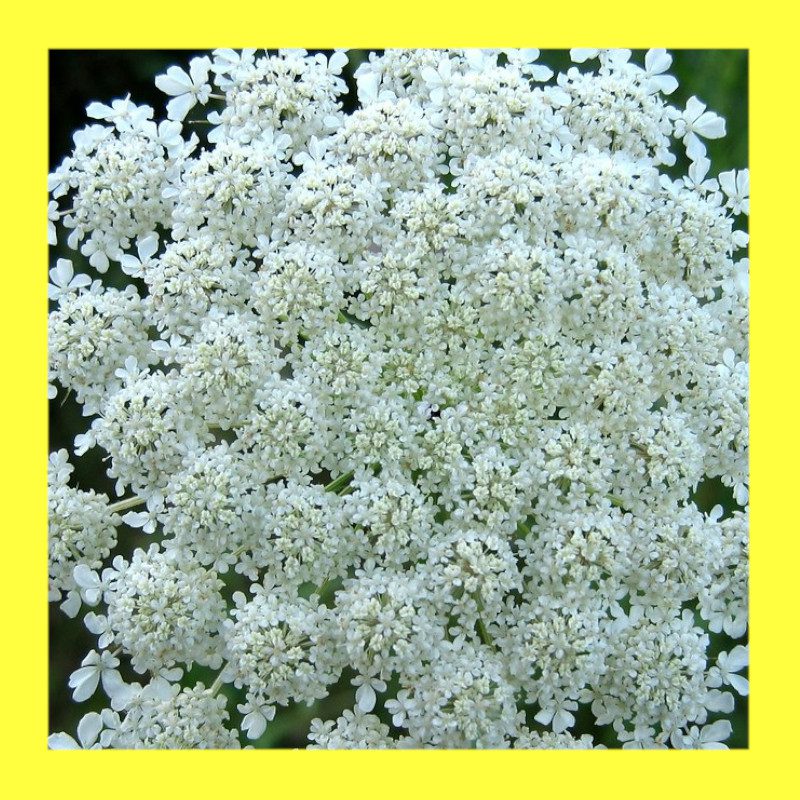
FLOWER-QUEEN ANNE’S LACE-FALSE (SALE) Ammi majus, commonly known as False Queen Anne’s Lace, is often confused with the true Queen Anne’s Lace (Daucus carota). While similar in appearance, Ammi majus is a refined ornamental species with larger, more open, lace-like white flower umbels and a more upright, elegant growth habit.
Unlike the wild carrot, Ammi majus is cultivated for gardens and floral arrangements, producing airy, delicate blooms that add height and softness to garden beds. It flowers prolifically through summer and is highly attractive to pollinators. Easy to grow and tolerant of a range of conditions, it is a favourite for cottage gardens and cut flower production.

How to grow Queen Anne’s Lace-False
- Choose a sunny position with at least 6–8 hours of direct sunlight.
- Grow in well-drained soil; sandy or loamy soils are ideal.
- Sow seeds directly into the garden in early spring or autumn when temperatures are mild (15–20°C).
- Lightly cover seeds to a depth of about 0.5 cm, as they benefit from some light for germination.
- Keep soil lightly moist during germination but avoid overwatering.
- Germination usually occurs within 10–21 days.
- Thin seedlings to 20–30 cm apart to allow airflow and healthy development.
- Plants typically grow 60–120 cm tall depending on conditions.
- Water moderately once established; avoid constantly wet soil.
- Fertiliser is generally not required in average soils.
- Deadhead to encourage continuous flowering or allow flowers to dry on the plant for seed collection.
Additional Growing Tips
- Performs best in average to poor soils — too much fertiliser reduces flowering
- Excellent cut flower, long-lasting in arrangements
- Self-seeds readily if flowers are left to mature
- Attracts beneficial insects and pollinators
- Suitable for naturalistic and wildflower-style plantings
Heritage of False Queen Anne’s Lace
Ammi majus originates from the Mediterranean region and has long been cultivated as an ornamental plant for its delicate, lace-like blooms. Historically used in traditional gardens across Europe and North Africa, it gained popularity in modern horticulture as a superior ornamental alternative to wild carrot due to its larger, more refined flower heads and reliable garden performance.
SHOP Garden Supplements
Category Colour Guide
Planting Guide for Australia
Scoville Heat Units (SHU)
Plant Height
60 - 120cm (1'12" - 3'11")
Season of Interest
Summer
Temperature Range
15 - 30°C (59 - 86°F)
Determine / Indeterminate
Annual / Perennial / Biennial
Annual
Frost Hardy / Tender
Tolerates light frost
Full Sun / Part Sun / Shade
Full Sun
Sow Direct / Raise Seedlings
Sow Direct
Soil
Well-draining soil
pH
6 - 7.5
Soil Temperature
15 - 20°C (59 - 68°F)
Seed Preparation
No treatment required
Sowing Depth
0.5mm (⅛")
Plant Spacing
20 - 30cm (¾" - 1⅛")
Row spacing
30 - 45cm (1⅛" - 1'6")
Watering
Moderate
Germination Time (Days)
41 - 21
Harvest Time (Days)
56 - 70
Good Companion Plants
Cosmos, Zinnias, Lavender, Salvia, Dill & Fennel, Marigolds, Echinacea (Coneflower)
Bad Companion Plants
Heavy feeders (e.g. pumpkins, corn, brassicas), Dense, shading plants (e.g. large cabbages, sunflowers too close), Very moisture-loving plants (e.g. celery)
Pests
Aphids, Spider Mite, Leaf Miners
Diseases
Powdery mildew, Root rot, Damping-off, Leaf spot (fungal)
More About Us
When I started this journey in 2009, I found nothing existed commercially, that was reasonably priced and easy to use. There was a homemade system which I also found was not that user-friendly.
Then a friend of mine told me about a homemade method she used. However, when I tried her method, I found this also didn’t suit my needs, as it too had flaws that I considered where important. It did not keep vermin out, did not have a lockable lid and (to me) looked unsightly in the garden